

Many writers believe finishing a manuscript is the hardest step in becoming an author, but the real mystery often begins after submission. Once a manuscript is sent to a literary agent or publisher, it enters a long and often hidden journey filled with evaluations, editorial discussions, market analysis, and production planning. These behind-the-scenes stages are some of the biggest Publishing Secrets that first-time authors rarely understand. The modern Traditional publishing process is not just about writing quality publishers also consider market trends, audience demand, and commercial potential before accepting a book. Understanding What happens after submitting a manuscript can help authors approach publishing with realistic expectations, patience, and a stronger strategy.
Step 1: Your Manuscript Enters the Submission Queue
After submission, your manuscript enters the publisher’s or literary agent’s review system, often called the “slush pile.” In the Literary agent submission process, hundreds of manuscripts may arrive every week, so assistants or junior editors usually perform the first screening. During this stage, professionals evaluate the query letter, opening chapters, synopsis, genre, and overall writing quality. Publishers look for manuscripts that immediately capture attention because strong openings increase the chances of further review. One of the biggest surprises about What happens after submitting a manuscript is the waiting period, as responses may take weeks or even months depending on submission volume and publisher schedules.
Step 2: Literary Agents and Editors Review Your Book
Once a manuscript passes the initial screening stage, literary agents and acquisitions editors begin a deeper evaluation. Understanding How publishers review manuscripts is important because publishers are searching for more than good storytelling. Editors assess writing quality, pacing, originality, reader appeal, genre trends, and commercial potential.
They also evaluate whether the book fits current market demands and whether the author has a platform or audience that can help promote the book. Many talented manuscripts are rejected not because the writing is weak, but because publishers believe the market is too competitive or the audience may be limited. These industry realities are some of the lesser-known Publishing industry secrets that many first-time writers do not expect.
Step 3: Editorial Meetings and Acquisitions Decisions
If editors see strong potential in a manuscript, the book moves into internal acquisitions discussions where publishing teams evaluate the financial and marketing viability of the project. During these meetings, editors, sales teams, and marketing departments discuss projected sales, production costs, audience targeting, and competitive titles already available in the market.
One of the biggest Publishing Secrets is that publishing decisions are heavily influenced by business considerations alongside creative quality. A publisher may genuinely admire a manuscript but still reject it if similar books are oversaturating the market or if projected profits appear too uncertain. Publishing houses carefully balance creativity with financial strategy before making final decisions.
Step 4: Contract Offers and Negotiations
When a publisher decides to acquire a manuscript, the next stage involves contracts and negotiations. This is where the Literary agent submission process becomes especially valuable because literary agents negotiate publishing terms on behalf of authors. Contracts often include advance payments, royalty percentages, audiobook rights, international rights, and marketing agreements.
Many first-time writers assume publication happens immediately after signing a contract, but publishers often schedule releases far in advance. Even after acceptance, books may take one or two years before reaching readers. Understanding contract details is essential because publishing agreements directly affect long-term earnings, creative rights, and future publishing opportunities.
Step 5: The Book Editing Process
After contracts are finalized, manuscripts enter the professional Book editing process, which transforms drafts into polished books ready for publication. This stage usually begins with developmental editing, where editors focus on story structure, pacing, consistency, and character development. Copyediting follows, improving grammar, sentence clarity, and writing flow, while proofreading ensures the final manuscript is free from spelling, punctuation, and formatting errors.
Nonfiction books may also go through fact-checking stages. Many authors are surprised by how collaborative and detailed the Book editing process becomes because even experienced writers often revise manuscripts multiple times before publication.
Step 6: Cover Design, Marketing, and Production
After publishing preparation, your book becomes ready for printing and digital release. Traditionally, books were printed in large quantities. Today, modern publishing allows print-on-demand, which means books get printed only when someone orders them. This saves cost and prevents wastage.
Your book also becomes available online through multiple platforms such as Amazon, Flipkart, Google Play Books, Kobo, and more. This gives your writing global reach. A good publishing house ensures your book is available to as many readers as possible.
Distribution is another publishing secret. Books reach readers not because they exist, but because they are properly distributed. Professional publishing makes this possible smoothly and efficiently.
Step 7: Understanding the Book Publishing Timeline
One of the most misunderstood aspects of traditional publishing is the Book publishing timeline. Even after a manuscript is accepted, publishers often take 12 to 24 months before officially releasing the book. This extended timeline exists because publishing companies coordinate editing schedules, printing timelines, retailer partnerships, seasonal launches, and marketing campaigns carefully. Publishers strategically plan release dates to maximize visibility and sales opportunities. For many writers, this long waiting period can feel frustrating, but it is a normal part of the Traditional publishing process in 2026.
Common Reasons Manuscripts Get Rejected
Understanding What publishers look for can help authors improve their submissions and reduce common mistakes. Manuscripts are frequently rejected because of weak opening chapters, poor pacing, lack of originality, genre mismatch, or insufficient market appeal. Sometimes publishers reject books simply because similar titles are already scheduled for release. In other cases, authors may lack an online platform or audience presence, which has become increasingly important in modern publishing. Rejection does not always mean the manuscript is bad; often, it reflects business decisions, market timing, or audience considerations rather than writing quality alone.
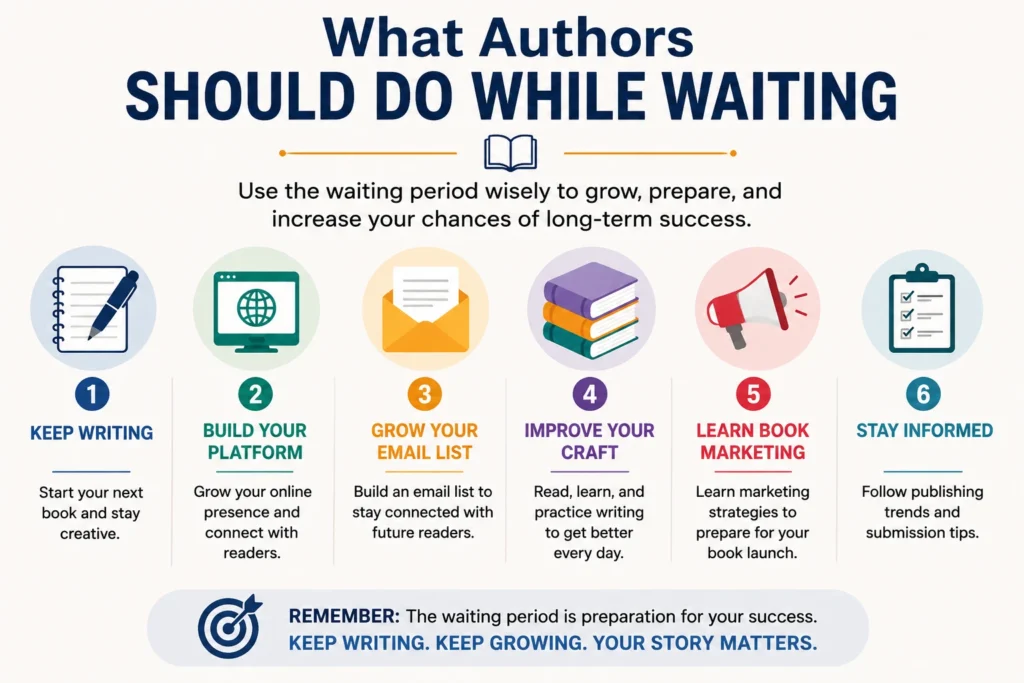
What Authors Should Do While Waiting
The waiting period after submission can feel stressful, but productive authors use this time wisely. Instead of constantly checking emails for responses, writers should focus on building long-term careers by starting new writing projects, improving marketing skills, and growing their online presence. Learning about Publishing a book in 2026, creating an author website, building an email list, and developing social media engagement can significantly improve future publishing opportunities. Publishers increasingly value authors who already have active reader communities because audience-building has become an important part of modern publishing success.
Conclusion
Understanding these Publishing Secrets helps writers approach publishing with greater confidence and realistic expectations. The journey after submission involves much more than simply waiting for acceptance because manuscripts go through screenings, editorial reviews, acquisitions meetings, contract negotiations, editing stages, and marketing preparation before publication. The modern Traditional publishing process combines creativity with business strategy, making patience and persistence essential for success. Although rejection and long timelines are common, authors who continue improving their craft and understanding the industry increase their chances of long-term success. For more publishing insights, writing tips, and industry guidance, explore the AGPH Books Blog and continue learning about the evolving world of publishing.