
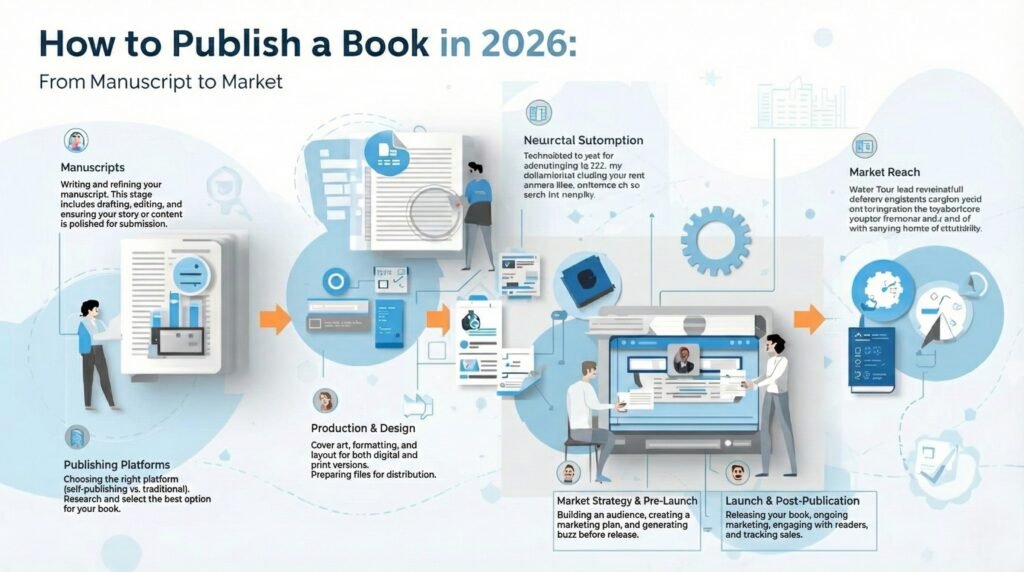
Publishing a book has never been more accessible than it is today. With digital platforms, AI-powered writing tools, audiobooks, and print-on-demand services transforming the publishing world, aspiring authors now have more opportunities than ever to share their stories with readers globally. Whether you dream of working with a major publishing house or prefer the freedom of Self-publishing in 2026, understanding the modern publishing process is essential for success.
This complete Book publishing guide will walk you through every stage of the journey from manuscript to market. From polishing your draft to choosing the right publishing path and creating effective Book marketing strategies, this guide will help you understand How to Publish a Book in 2026 successfully.
Step 1: Finish and Polish Your Manuscript
Every successful book begins with a strong manuscript. Before thinking about publishing, authors should focus on editing, proofreading, and improving the overall quality of their writing. First drafts are rarely perfect, so revising your work multiple times is an important part of the publishing process.
Start by self-editing your manuscript for structure, pacing, clarity, and grammar. Many authors also work with beta readers who provide feedback on story flow and readability. Hiring professional editors can further improve the quality of your book and prepare it for publication.
Proper formatting is equally important because publishers and readers expect clean, professional manuscripts. Whether you are writing fiction, nonfiction, or academic content, polished writing greatly increases your chances of success in both traditional and independent publishing.
Step 2: Choose Between Traditional Publishing and Self-Publishing
One of the biggest decisions in How to Publish a Book in 2026 is choosing between traditional publishing and self-publishing.
The Traditional publishing process usually involves literary agents, manuscript submissions, publishing contracts, and professional editorial support. Authors submit query letters and manuscripts to agents or publishers who decide whether the book fits their publishing goals.
Traditional publishing offers credibility, bookstore distribution, and industry recognition. However, the process can be highly competitive and often takes months or even years before publication.
Step 3: Design a Professional Book Cover
People absolutely judge books by their covers. A professional cover design can significantly impact sales, visibility, and reader interest. Your book cover should match the genre, attract the target audience, and communicate professionalism immediately.
In modern publishing, authors often hire freelance cover designers or use professional design platforms to create visually appealing covers. Typography, color selection, and imagery all play important roles in creating an effective book cover.
For ebooks, thumbnail visibility is especially important because readers often browse books on mobile devices and online stores.
Step 4: Format Your Book for Publishing
Formatting ensures that your book looks professional across ebooks, paperbacks, hardcovers, and audiobooks. Poor formatting can create a negative reading experience and reduce credibility.
Most authors use formatting tools or hire professionals to prepare files for platforms like Amazon KDP and IngramSpark. Ebook formatting differs from print formatting because digital books must adapt to different screen sizes and reading devices.
Clean chapter headings, readable fonts, consistent spacing, and proper margins are essential for professional-quality publishing.
Step 5: Publish Your Book Online
Once your manuscript and cover are ready, the next step is Publishing a book online. Self-publishing platforms allow authors to upload manuscripts, set pricing, choose categories, and publish globally within hours or days.
Popular platforms include:
- Amazon KDP
- Kobo Writing Life
- Apple Books
- IngramSpark
- Draft2Digital
Authors should optimize metadata carefully, including book titles, subtitles, descriptions, and keywords. Strong metadata improves discoverability in online bookstores and search results.
Step 6: Create Effective Book Marketing Strategies
Publishing a book is only the beginning. Without strong Book marketing strategies, even high-quality books may struggle to reach readers.
Modern authors use social media, email newsletters, book blogs, YouTube, TikTok, and author websites to build audiences. Platforms like Instagram and BookTok have become powerful tools for book promotion in 2026.
Some effective marketing strategies include:
- Building an author website
- Running Amazon ads
- Creating email subscriber lists
- Collaborating with influencers
- Offering free sample chapters
- Encouraging reader reviews
Successful book marketing requires consistency, patience, and audience engagement.
Step 7: Launch Your Book Successfully
A strong Book launch checklist helps maximize visibility during release week. Authors should plan launch campaigns in advance and promote their books before publication day.
Important launch steps include:
- Announcing release dates
- Sharing cover reveals
- Sending advance review copies
- Scheduling social media posts
- Hosting virtual launch events
- Encouraging early reviews
Book launches create momentum and improve visibility on online retail platforms.
Publishing Industry Trends in 2026
Several Publishing industry trends are shaping the future of books in 2026. AI-assisted editing tools are helping authors improve productivity, while audiobooks continue growing rapidly worldwide.
Print-on-demand technology is reducing publishing costs and eliminating inventory risks for indie authors. Subscription-based reading platforms and direct-to-reader sales are also becoming more popular.
Another major trend is hybrid publishing, where authors combine elements of traditional and self-publishing to maximize flexibility and revenue opportunities.
Understanding these evolving trends helps writers adapt to the modern publishing landscape more effectively.
Conclusion
Learning How to Publish a Book in 2026 is no longer limited to traditional publishing gatekeepers. Today, authors have multiple opportunities to bring their stories to readers through both traditional and self-publishing methods. From editing your manuscript to creating professional covers and implementing strong Book marketing strategies, every stage plays an important role in successful publishing.
The modern publishing industry rewards authors who combine quality writing with strategic marketing and audience engagement. Whether you choose traditional publishing or decide to Publish a book online independently, consistency and professionalism remain essential for long-term success.
If you want to learn more about publishing, writing, and book marketing, explore additional resources on the AGPH Books Blog for expert insights and practical publishing tips.
Thanks for some other great article. Where else may
anyone get that kind of information in such a perfect manner of writing?
I’ve a presentation next week, and I am on the look
for such information.