
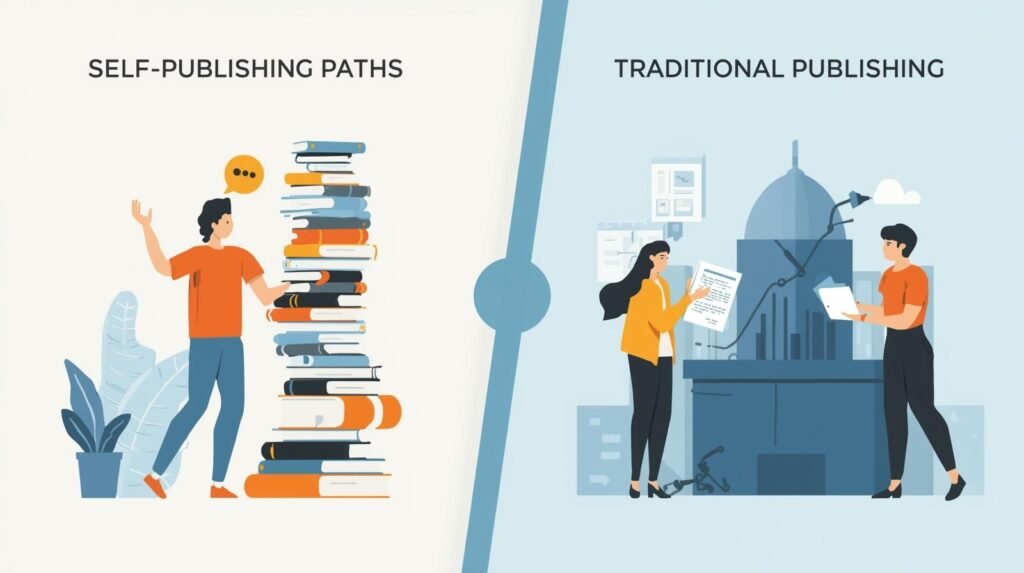
Choosing between Self-Publishing or Traditional Publishing is one of the biggest decisions authors face in 2026. With the rise of digital platforms, AI writing tools, audiobooks, and print-on-demand services, publishing a book has become more accessible than ever. Today, writers can either work with established publishing houses or independently release books online. However, the Best publishing option for authors depends on personal goals, budget, creative control, and long-term career plans.
This guide explains the key differences between Traditional publishing vs self-publishing and helps first-time authors decide which route suits them best.
What Is Traditional Publishing?
Traditional publishing involves submitting a manuscript to literary agents or publishing companies. If accepted, the publisher handles editing, design, printing, distribution, and part of the marketing process. In most cases, authors receive an advance payment and royalties from book sales.
One major advantage of a Traditional publishing guide is credibility. Traditionally published books often gain better bookstore access, media attention, and industry recognition. Publishers also provide professional support teams that improve book quality and visibility.
However, traditional publishing can be highly competitive and slow. Authors may wait months or even years before their book is published. Creative decisions like cover design, pricing, and titles are also often controlled by the publisher.
What Is Self-Publishing?
Independent publishing allows authors to publish books without relying on traditional publishers. Platforms such as Amazon Kindle Direct Publishing (KDP), Kobo, and IngramSpark make it easy for writers to Publish research paper online or release novels, nonfiction books, and ebooks globally.
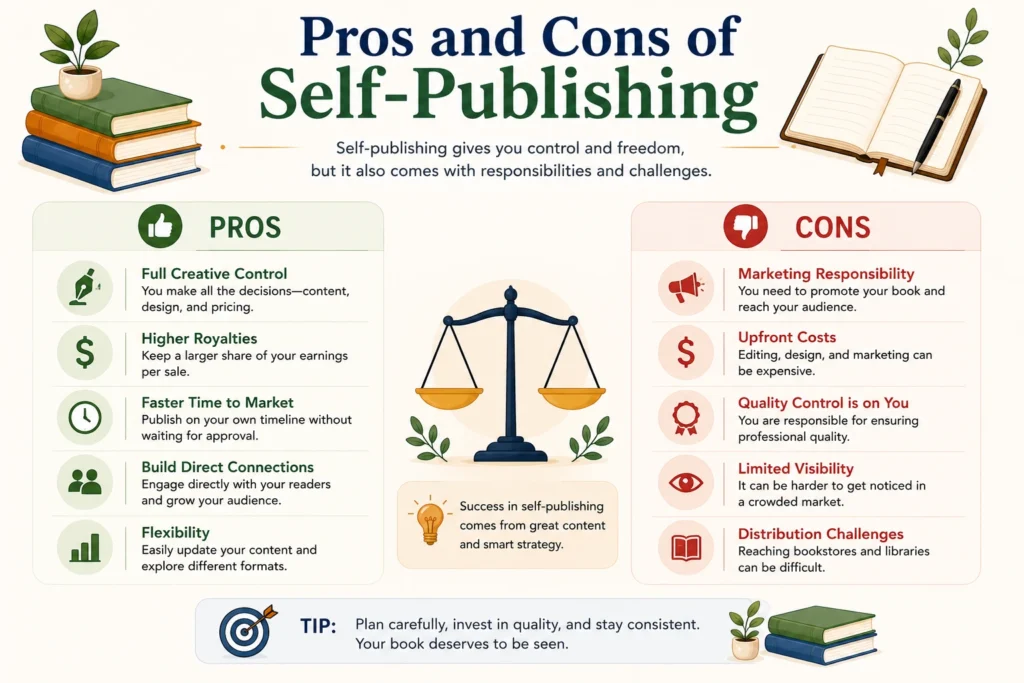
One of the biggest benefits of Self-publishing in 2026 is creative freedom. Authors control every aspect of the book, including editing, design, pricing, and release schedules. Self-publishing also offers faster publishing timelines and higher royalty percentages compared to traditional publishing.However, self-published authors are responsible for marketing, editing, and production costs themselves. Without proper promotion, books may struggle to reach readers.
Major Differences Between Self-Publishing and Traditional Publishing
- Creative Control In Self-Publishing or Traditional Publishing, creative control is one of the biggest differences. Self-published authors maintain full ownership over covers, titles, and marketing strategies. Traditional publishing usually involves collaboration with editors and publishers who may influence major decisions.
- Royalties and Earnings Self-published authors often earn 35%–70% royalties, while traditional publishers generally offer lower royalty percentages but may include advance payments. For authors focused on long-term earnings, self-publishing can be financially rewarding.
- Publishing Speed Traditional publishing often takes one to three years because of submissions, editing, and production timelines. In contrast, Self-publishing in 2026 allows books to be published within weeks.
- Marketing and Promotion Both publishing models require author involvement in marketing. Even traditionally published authors are expected to build audiences through social media, websites, and email newsletters.
Pros and Cons of Traditional Publishing
A strong Traditional publishing guide also highlights the strengths and weaknesses of this model.
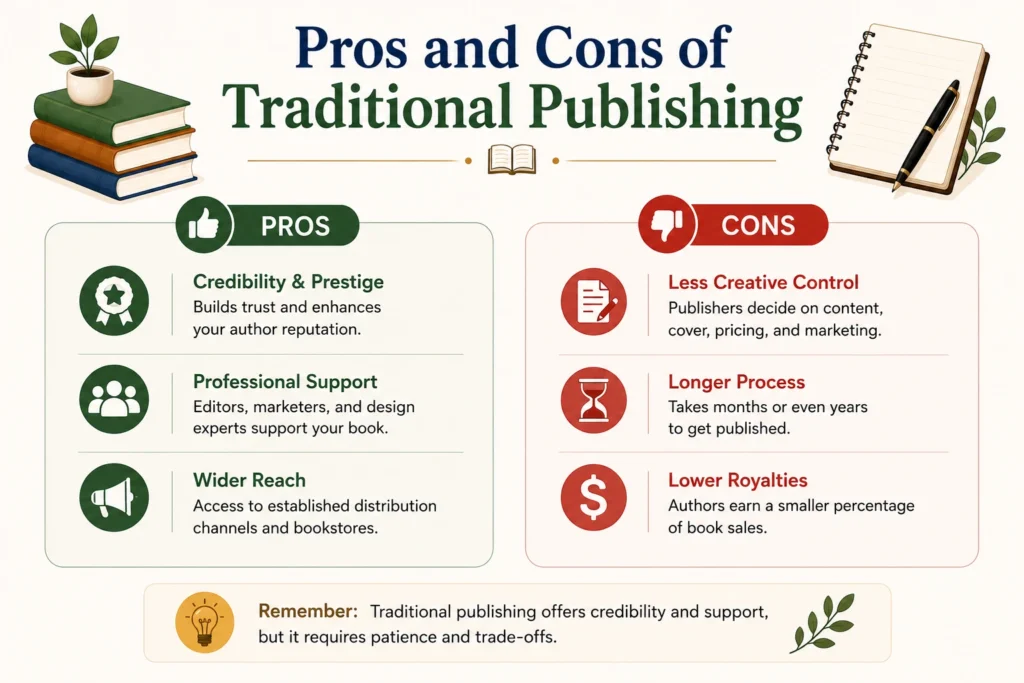
Traditional publishing offers professional editing, industry credibility, bookstore access, and publishing support teams. Many authors value the prestige associated with established publishers.
On the downside, traditional publishing is extremely competitive, offers lower royalties, and often limits creative freedom. The long publishing timeline can also frustrate authors eager to release their work quickly.
Publishing Industry Trends in 2026
Several Publishing industry trends are shaping the future of books in 2026. AI-assisted writing and editing tools are helping authors improve productivity, while audiobooks and ebooks continue growing rapidly. Social media platforms such as TikTok and Instagram now play major roles in book marketing.
Another major Book publishing trends 2026 development is the rise of hybrid authors who combine traditional and self-publishing strategies. Print-on-demand technology and direct-to-reader sales are also making Publishing a book online easier and more profitable.
Which Option Is Best for You?
The Best publishing option for authors depends on individual goals. Writers who want creative freedom, faster publishing, and higher royalties may prefer self-publishing. Authors seeking prestige, bookstore placement, and professional support may benefit more from traditional publishing. There is no universal winner in Traditional publishing vs self-publishing. The best choice depends on your writing goals, budget, patience, and marketing abilities.
Conclusion
In 2026, both Self-Publishing or Traditional Publishing offer exciting opportunities for authors. Self-publishing provides independence and flexibility, while traditional publishing offers professional recognition and industry support. Rather than focusing on which method is universally “better,” authors should choose the path that aligns with their personal vision and career goals. Success in publishing ultimately depends on writing quality, consistency, audience engagement, and long-term dedication.