
Publishing a research paper for the first time is a major achievement for students, scholars, and researchers. However, selecting the Best Journal to Publish Research Paper can be confusing for beginners because there are thousands of academic journals available across different disciplines. Choosing the right journal plays an important role in improving research visibility, credibility, citations, and academic recognition. A good journal helps researchers reach the correct audience and increases the chances of professional growth. This academic publishing guide will help first-time authors understand how to select the right journal, avoid predatory publishers, and improve their chances of successful publication.
Understanding Your Research Area
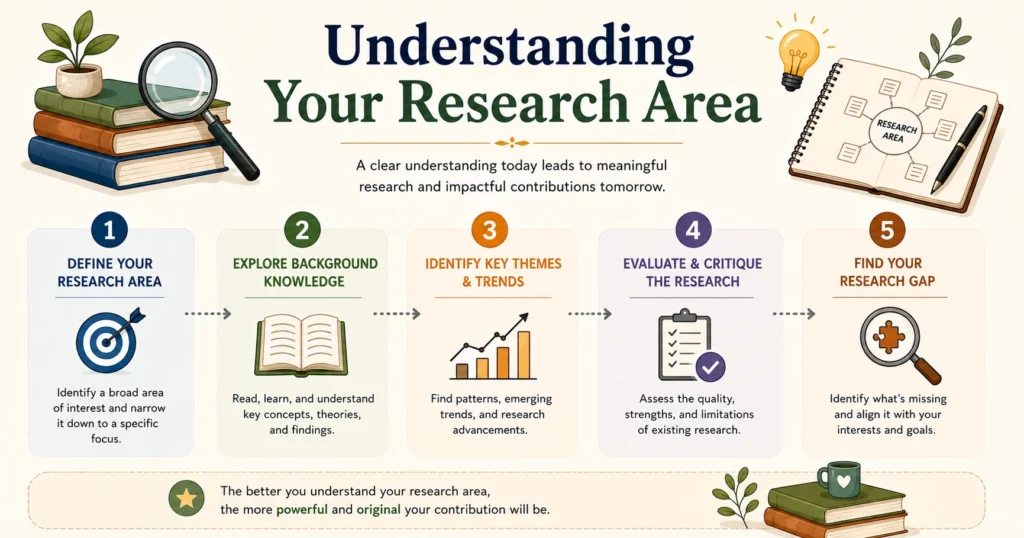
Before submitting a manuscript, authors must clearly understand their research field and target audience. One of the most important steps in research journal selection is identifying journals that match the topic, methodology, and objectives of the research paper. For example, a paper related to artificial intelligence may fit technology journals, while healthcare-related AI research may suit medical journals. Authors should also determine whether their work is specialized or interdisciplinary because this affects the type of journal they should choose. Understanding the scope of the research helps researchers identify the best journal for first-time authors and avoid unnecessary rejection.
Types of Journals
There are different categories of journals available for research paper publication, and each serves a different purpose. Peer-reviewed journals are considered highly credible because experts review the manuscript before publication to ensure originality and quality. Open-access journals allow readers to access research freely online, increasing visibility and citation opportunities. Many researchers also prefer Scopus-indexed journals because they are globally recognized and often required by universities and research institutions. SCI and SCIE journals are highly prestigious and suitable for high-quality research work. Conference journals and proceedings are common in engineering and computer science fields because they provide faster publication opportunities. Understanding these journal categories helps researchers choose the most suitable platform to publish research paper online.
Key Factors to Consider Before Choosing a Journal
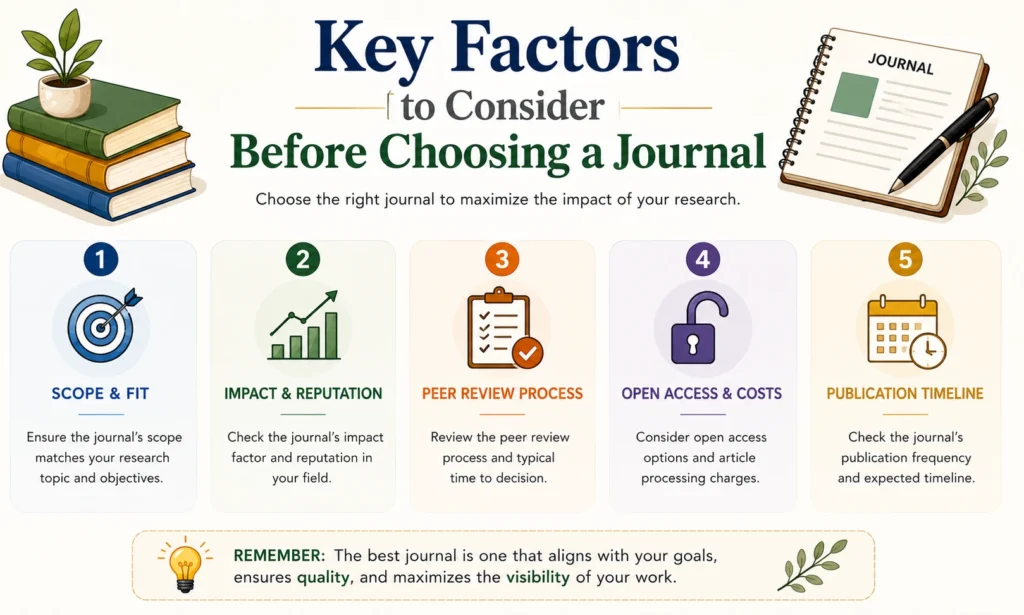
Several factors should be evaluated carefully before submitting a manuscript. The first and most important factor is the journal’s scope because journals only publish papers related to their specific subject areas. Authors should also check the impact factor, indexing status, acceptance rate, publication fees, and review timeline. Many first-time researchers prefer journals with moderate impact factors and reasonable acceptance rates because they provide better opportunities for publication success. Checking whether the journal is indexed in databases such as Scopus, Web of Science, or PubMed is also essential because indexed journals offer better visibility and academic credibility. These considerations are crucial in understanding how to choose a journal for publication effectively.
How to Find the Best Journal
Finding the Best Journal to Publish Research Paper requires careful research and planning. One effective strategy is to review published papers similar to your topic and identify where those studies were published. Researchers can also use journal recommendation tools provided by publishers such as Elsevier, Springer, Wiley, and IEEE. Platforms like Google Scholar, Scopus, and Web of Science are useful for discovering suitable journals and trending research topics. Seeking guidance from supervisors, mentors, or experienced researchers can also simplify the process of research journal selection. Combining these methods helps authors identify reliable and reputable journals for submission.
Finding the Best Journal to Publish Research Paper
requires careful research and planning. One effective strategy is to review published papers similar to your topic and identify where those studies were published. Researchers can also use journal recommendation tools provided by publishers such as Elsevier, Springer, Wiley, and IEEE. Platforms like Google Scholar, Scopus, and Web of Science are useful for discovering suitable journals and trending research topics. Seeking guidance from supervisors, mentors, or experienced researchers can also simplify the process of research journal selection. Combining these methods helps authors identify reliable and reputable journals for submission.
Warning Signs of Predatory Journals
First-time researchers should be cautious about predatory journals because these publishers often exploit inexperienced authors. Predatory journals usually promise unrealistically fast publication and guaranteed acceptance without proper peer review. Some journals display fake impact factors or misleading indexing claims to appear legitimate. Their websites often contain poor grammar, incomplete editorial information, and unprofessional design. Researchers may also receive spam emails aggressively inviting them to submit manuscripts. Legitimate peer-reviewed journals always maintain transparent review processes and ethical publication standards. Avoiding predatory journals is essential for maintaining academic credibility and ensuring successful research paper publication.
Tips for Increasing Acceptance Chances
Following the journal’s author guidelines carefully can significantly improve the chances of manuscript acceptance. Researchers should ensure proper formatting, accurate citations, and professional organization of the paper. Writing a strong abstract is also important because editors often use it to evaluate the quality and relevance of the study. A professional cover letter explaining the importance of the research and its suitability for the journal can create a positive impression. Authors should also use plagiarism detection tools and proofread their work carefully to eliminate grammatical and structural errors. These journal publication tips help first-time researchers prepare high-quality manuscripts for submission.
Common Mistakes First-Time Authors Make
Many beginners make common mistakes during the publication process. One major mistake is submitting a paper to a journal without checking whether the research topic matches the journal’s scope. Ignoring formatting instructions is another issue that can lead to immediate rejection. Weak literature reviews, poor grammar, and excessive technical jargon can also reduce the quality of the manuscript. Some researchers focus only on high-impact journals without considering whether the journal is appropriate for their work. Understanding these mistakes helps first-time researchers improve their manuscripts and select the best journal for first-time authors more effectively.
Top Recommended Journals and Publishers for Beginners
Several publishers are widely recognized for their quality and credibility in academic publishing. Elsevier publishes journals in engineering, medicine, science, and business fields. Springer is highly respected for science and technology research, while Wiley offers strong journals in healthcare, chemistry, and education. Taylor & Francis is popular in humanities and social sciences, and IEEE is considered one of the best platforms for engineering and computer science research. Open-access publishers such as MDPI and PLOS ONE also provide good opportunities for researchers who want to publish research paper online with broader accessibility. Selecting reputable publishers increases research visibility and professional recognition.
Conclusion
Choosing the Best Journal to Publish Research Paper is one of the most important decisions for first-time researchers. A suitable journal improves research visibility, academic credibility, and citation opportunities while helping authors reach the right audience. Researchers should carefully evaluate journal scope, indexing, impact factor, review timelines, and publication ethics before submission. Avoiding predatory journals and following proper submission guidelines can greatly increase publication success. Although rejection is a common part of academic publishing, persistence and continuous improvement are essential for long-term success. With the right strategy and careful planning, first-time authors can confidently navigate the world of research paper publication and build a strong academic career.