
Publishing a book once required authors to invest large amounts of money upfront. Traditional printing methods often demanded thousands of copies to be printed at once, creating financial pressure, storage problems, and significant risks for writers. Many authors struggled to afford large print runs, especially first-time writers exploring self-publishing books independently.
Today, the publishing industry has changed dramatically because of print on demand publishing. Modern POD technology allows books to be printed only when a customer places an order. This means authors no longer need to store hundreds of unsold copies or invest heavily before publishing. For many independent writers, print on demand books have made publishing more affordable, flexible, and accessible than ever before.
The rise of print on demand services has created exciting opportunities for first-time authors, indie publishers, and creators who want professional publishing solutions without large financial risks.
What Are Print on Demand Books?
Print on demand books are books printed individually after a customer purchases them online. Unlike traditional printing methods that require bulk inventory, POD technology produces copies only when needed.
This publishing method allows authors to avoid the costs of warehousing, unsold inventory, and large printing investments. Instead of ordering thousands of copies upfront, writers can simply upload their manuscript files to a POD platform and allow the system to manage printing automatically.
For many authors exploring low-cost book publishing, POD has become one of the most practical and beginner-friendly publishing options available today.
How Does Print on Demand Publishing Work?
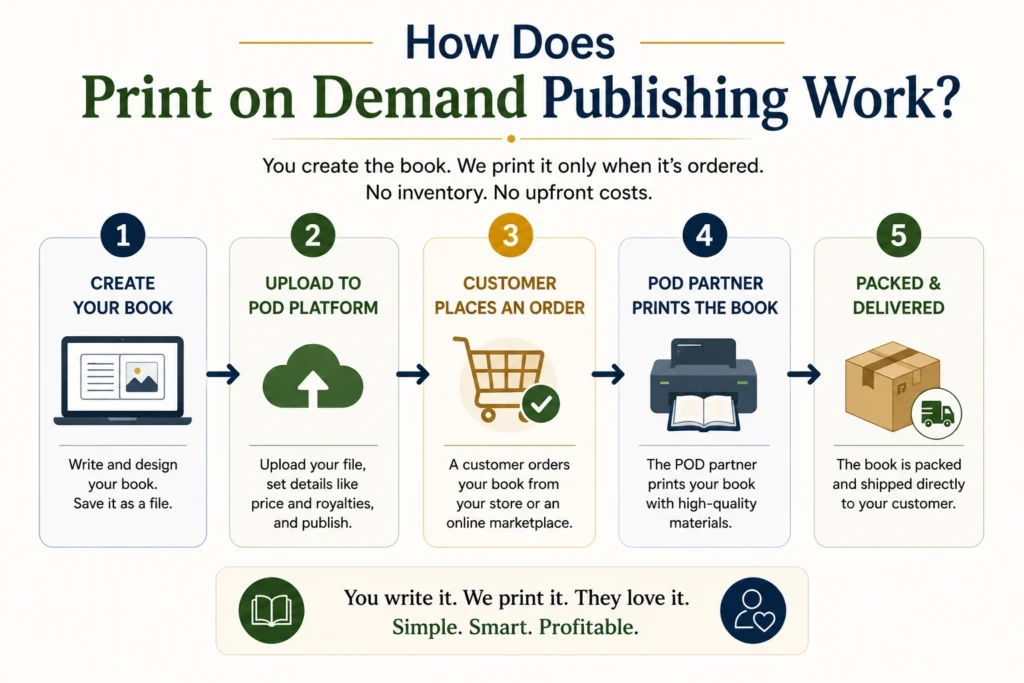
Understanding how print on demand works is actually much simpler than many writers expect. The process usually begins when an author uploads a formatted manuscript and cover design to a publishing platform. After setting pricing, distribution preferences, and publishing details, the book becomes available for sale online.
When a customer places an order, the POD platform automatically prints a single copy of the book and ships it directly to the buyer. Authors do not need to manage inventory, packaging, or shipping logistics themselves.
Most modern print on demand companies also handle payment processing, order fulfillment, and distribution through online marketplaces such as Amazon and global bookstores.
This automated system has made publish books online strategies much easier for independent authors.
Why Authors Are Choosing Print on Demand for Authors
One of the biggest reasons writers choose print on demand for authors is reduced financial risk. Traditional printing often requires large upfront investments, while POD allows authors to publish professionally with minimal startup costs.
This flexibility is especially valuable for writers exploring self-publishing for beginners. New authors can test their books in the market without worrying about unsold inventory or expensive printing orders.
Another major benefit is global distribution. Many POD platforms allow books to be sold internationally through online retailers, helping writers reach readers worldwide. For authors seeking independent publishing opportunities, POD offers creative control, accessibility, and faster publishing timelines.
Popular Print on Demand Companies
Several major print on demand companies currently dominate the publishing industry. Each platform offers different features, royalty structures, and distribution opportunities.Amazon KDP print on demand is one of the most popular options because it provides direct access to Amazon’s global marketplace. Writers can publish paperback and hardcover books while benefiting from Amazon’s massive customer base.
IngramSpark is another respected platform known for wide bookstore and library distribution. Many professional authors use IngramSpark to expand print availability beyond Amazon.Platforms like Draft2Digital, Lulu, and Blurb also support POD book publishing while offering different formatting, printing, and distribution tools for independent authors.Choosing the right platform often depends on an author’s publishing goals, audience, and budget.
Understanding Amazon KDP Print on Demand
Among all book printing services, Amazon KDP remains one of the most beginner-friendly platforms. Writers can upload manuscripts, create book listings, set pricing, and distribute books globally through Amazon’s ecosystem.
One major advantage of Amazon KDP print on demand is accessibility. Authors can publish quickly without paying upfront printing fees. Books are printed only after customers place orders, making the process highly cost-efficient.
KDP also allows writers to combine eBook publishing and paperback publishing under one platform, simplifying the publishing experience for first-time authors.
Common Mistakes Authors Make With POD Publishing
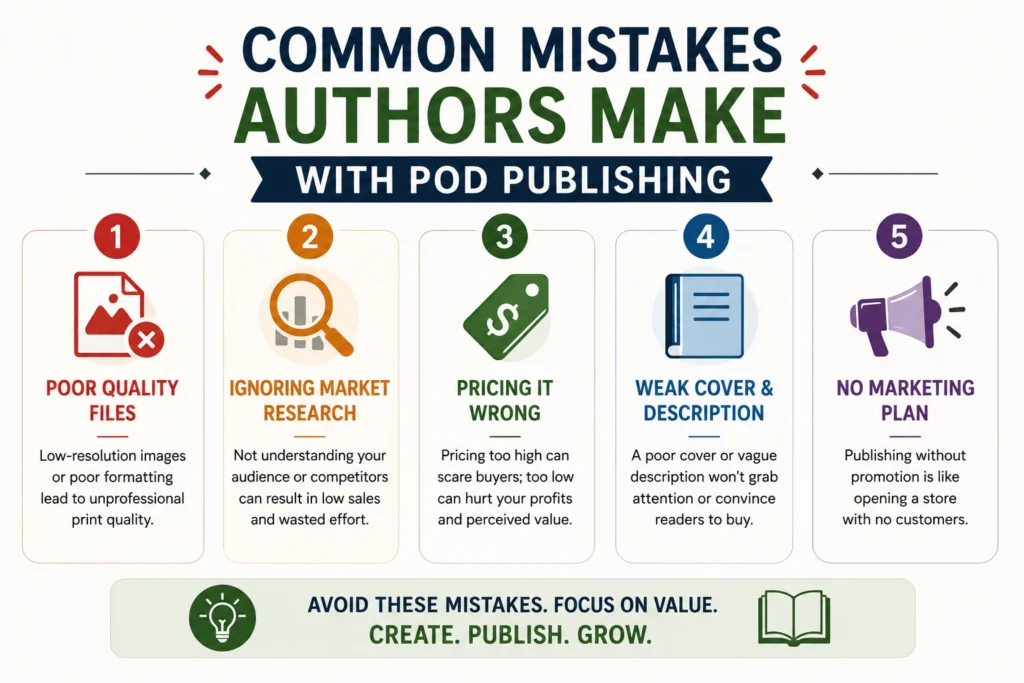
Although print on demand publishing simplifies the publishing process, many writers still make avoidable mistakes.Poor formatting is one of the most common issues. Readers expect books to look professional, and badly formatted interiors can damage credibility immediately. Weak cover designs and skipping professional editing also reduce reader trust.
Another mistake is unrealistic sales expectations. Many authors assume publishing alone guarantees success, but marketing and reader engagement remain essential for long-term growth.Successful POD book publishing depends heavily on presentation, quality, and consistent promotion.
Is POD Right for You?
For many writers, print on demand for authors is an ideal publishing solution. It works especially well for first-time authors,niche writers,self-publishers,and independent creators testing new ideas.
POD offers lower financial risk compared to traditional offset printing because authors only print copies after sales occur. However, offset printing may provide higher profit margins for authors selling large quantities of books.
The best publishing choice depends on your goals, budget, and publishing strategy.
Tips for Successful POD Book Publishing
Authors who succeed with print on demand books usually focus strongly on quality and professionalism. Investing in editing, formatting, attractive cover design, and optimized book descriptions can dramatically improve reader trust and sales performance.
Consistent marketing is equally important. Writers who actively build author brands, engage with readers, and promote their books online often achieve stronger long-term results.
Publishing a book is only the beginning. Building visibility and reader relationships is what creates sustainable success.
Conclusion
Modern print on demand publishing has completely transformed the self-publishing industry. Writers no longer need massive budgets or warehouse storage to professionally publish books. With the help of print on demand services, authors can now focus more on creativity, storytelling, and reader engagement while platforms handle printing and fulfillment automatically.
For many writers exploring self-publishing books, POD offers flexibility, affordability, and global publishing opportunities that were once difficult to achieve.
Ready to publish your book professionally using print on demand publishing? Visit AGPH Books to explore expert self-publishing, formatting, editing, and book marketing services for authors.