
Writing a book for the first time is a dream many people carry for years. Some want to write fiction, while others wish to share knowledge, life experiences, or personal stories. The excitement of starting a book often comes with hope, creativity, and ambition. However, once the actual writing process begins, many first-time authors realize that writing a book is far more challenging than they imagined.
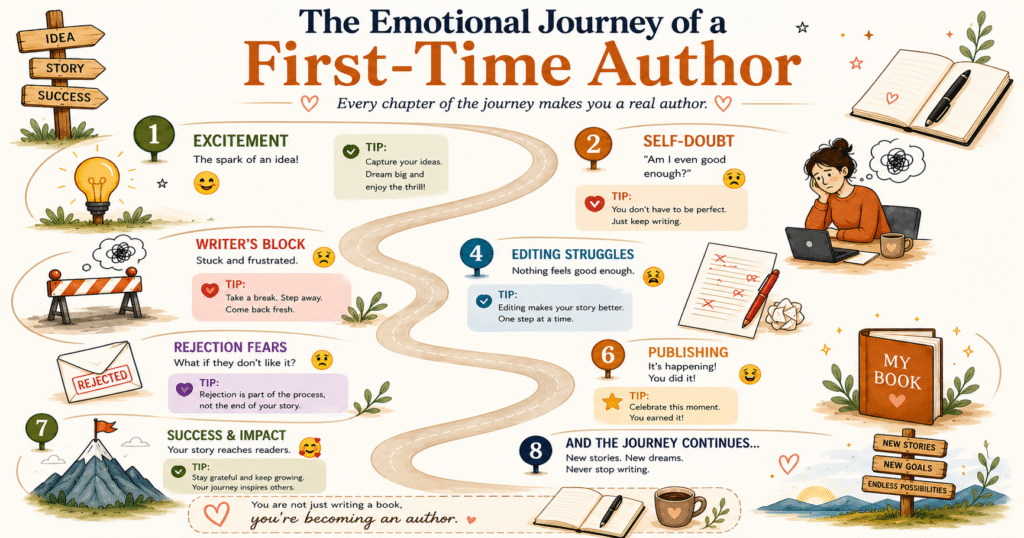
The journey is filled with emotional highs and lows. One day, you feel inspired and confident, and the next day, you may question whether you are capable of finishing the manuscript at all. These experiences are completely normal. In fact, almost every successful writer has faced similar struggles during their early writing journey.
Understanding the common first-time book writing challenges can help new writers stay motivated and avoid giving up too early. Whether you are writing a novel, memoir, educational guide, or self-help book, learning about these obstacles can prepare you mentally and emotionally for the road ahead. In this article, we will discuss the most common problems faced by new writers and provide practical solutions to help aspiring authors successfully complete their first book.
Lack of Confidence in Writing
One of the most common struggles new writers face is a lack of confidence. Many aspiring authors start writing with excitement but quickly begin doubting their abilities. They compare themselves to bestselling authors and feel discouraged when their writing does not sound polished or professional immediately.
This comparison can become emotionally exhausting because beginners often forget that published books go through multiple rounds of editing, revisions, and professional refinement before reaching readers. A first draft is not meant to be perfect. Its purpose is simply to transform ideas into words.
Many first-time writers also fear judgment from others. They worry that readers may criticize their work or find it uninteresting. This fear often prevents writers from sharing their ideas or even finishing their manuscripts. Unfortunately, self-doubt can become one of the biggest barriers to creativity.
- Building confidence : As a writer takes time and patience. One of the best ways to improve confidence is by writing consistently without focusing too much on perfection. Writers should remind themselves that improvement comes through practice. Every chapter written, every mistake corrected, and every revision completed contributes to growth as an author.
- Reading books : Written by successful authors can also help beginners understand that good writing is developed over time. Joining writing communities or workshops can further encourage confidence because it allows writers to connect with others facing similar struggles. The more writers continue practicing and learning, the more confidence they gradually build in their abilities.
Writer’s Block and Lack of Creativity
Another major challenge in writing a book for the first time is dealing with writer’s block. Almost every writer experiences moments when ideas stop flowing, creativity feels blocked, and motivation disappears completely. For beginner writers, these moments can feel frustrating and discouraging.
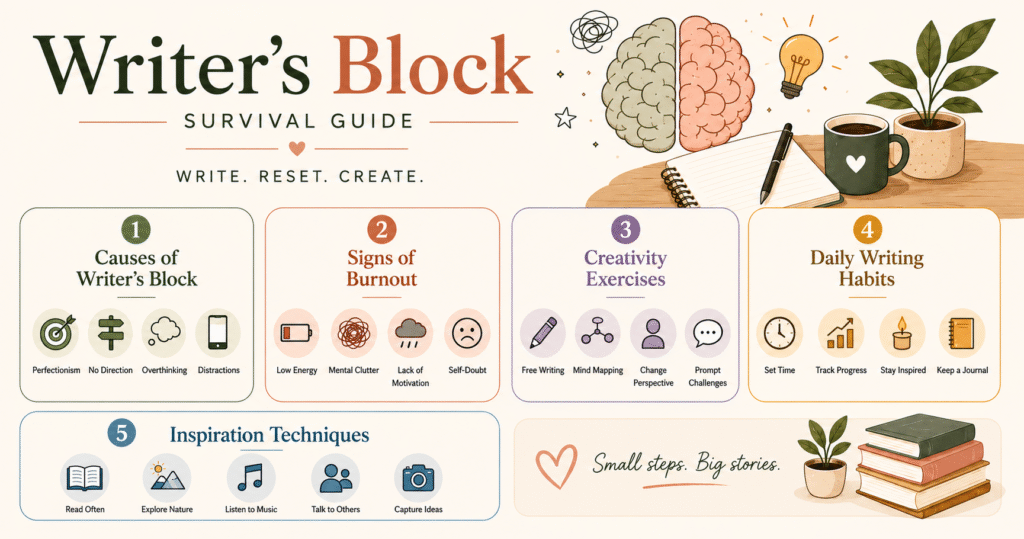
- Writer’s block can happen for several reasons : Sometimes writers become overwhelmed by pressure to create perfect content. Other times, stress, exhaustion, fear of failure, or overthinking can interrupt creativity. Many writers also lose momentum because they constantly edit their work while writing instead of allowing ideas to flow naturally.
- One effective way to overcome writer’s block : is by developing a daily writing habit. Writing regularly trains the brain to become more creative over time. Even writing small amounts every day can help maintain consistency and reduce creative pressure. Many successful authors recommend setting realistic writing goals instead of waiting for inspiration to appear.
Reading books, listening to music, watching films, or observing everyday life can also inspire creativity. Sometimes stepping away from the manuscript for a short break helps writers refresh their minds and return with new ideas. Brainstorming techniques such as mind mapping, free writing, or character interviews can also unlock creativity when writers feel stuck.
Perhaps the most important lesson for beginners is understanding that creativity does not always appear instantly. Writing requires discipline just as much as inspiration. The more consistently writers practice, the easier it becomes to overcome creative blocks and continue making progress.
Difficulty in Organizing Ideas
Many aspiring authors have excellent ideas but struggle to organize them into a clear and structured manuscript. This is one of the most common manuscript writing problems faced by beginners. Writers may have scenes, characters, or concepts in their minds but find it difficult to connect everything smoothly.
Fiction writers often struggle with plot development, pacing, and character arcs. They may start with a strong opening but later lose direction in the middle of the story. Nonfiction writers can also face difficulties structuring chapters logically and presenting information clearly.
Without proper organization, books can feel confusing, repetitive, or incomplete. Readers may struggle to follow the storyline or understand the main message. This is why planning and outlining are extremely important during the writing process.
- Creating a basic outline : before starting the manuscript can help writers organize ideas more effectively. Outlines do not need to be overly detailed, but they should provide a clear sense of direction. Writers should understand the purpose of each chapter and how it contributes to the overall story or message.
- Character development : is another challenge many fiction writers face. Creating believable characters requires understanding their personalities, motivations, flaws, and emotional journeys. Readers connect with characters who feel realistic and emotionally relatable.
- Organizing ideas : becomes easier with experience, revision, and planning. Writers should allow themselves the flexibility to adjust their outlines while continuing to move forward with the manuscript.
Time Management Problems
Finding enough time to write is another major challenge for beginner authors. Many aspiring writers balance jobs, studies, family responsibilities, and social commitments while trying to complete their books. As a result, writing often gets postponed or neglected.
One common misconception is that writers need several uninterrupted hours every day to make progress. In reality, consistent small writing sessions can be highly effective. Writing for even thirty minutes daily can eventually lead to a completed manuscript.
- Time management : becomes easier when writers create realistic schedules. Instead of focusing on finishing the entire book quickly, beginners should set smaller and achievable goals. Writing a few hundred words daily may seem small initially, but consistent effort produces significant results over time.
- Removing distractions : is also important. Social media notifications, television, and multitasking can reduce productivity and interrupt focus. Writers should try to create a comfortable and distraction-free environment where they can concentrate fully on their work.
- Understanding personal : productivity patterns can also help. Some writers feel most creative early in the morning, while others work better late at night. Discovering the best writing hours can improve efficiency and consistency.
- The key to completing : a book is not writing perfectly every day but continuing to show up regularly despite life’s responsibilities and challenges.
Editing and Rewriting Struggles
Many beginner writers underestimate the importance of editing. They often believe the hard part ends once the first draft is completed. In reality, editing is one of the most demanding stages of the entire writing process.
First drafts are rarely polished. Most manuscripts contain grammar issues, repetitive wording, weak dialogue, structural problems, and unclear sections that require improvement. This is completely normal and happens to writers at every level.
- One common mistake : beginners make is editing excessively while still writing the first draft. Constantly rewriting unfinished chapters can interrupt momentum and slow progress significantly. It is often more productive to complete the draft first and then focus on revisions later.
- Another challenge : involves accepting feedback. Many writers become emotionally attached to their work and struggle to handle criticism objectively. However, constructive feedback is essential for improvement. Beta readers, editors, and writing mentors can identify weaknesses that authors may overlook themselves.
- Professional editing :is especially important for writers planning to self-publish. Editors improve readability, grammar, pacing, consistency, and overall manuscript quality. While hiring professional editors may involve financial investment, it significantly increases the chances of producing a polished and professional book.
- Learning : the process of editing your first book helps writers understand that rewriting is not a sign of failure but a natural part of creating high-quality work.
Fear of Rejection and Criticism
Fear of rejection is one of the deepest emotional struggles writers experience. Many first-time authors hesitate to share their work because they worry readers may dislike it or criticize their writing.
This fear often prevents talented writers from finishing manuscripts, submitting their work to publishers, or publishing altogether. Negative feedback can feel personal because writing often involves emotional vulnerability and creativity.
However, rejection is a normal part of the publishing industry. Even highly successful authors faced rejection before achieving recognition. Many bestselling books were initially rejected multiple times by publishers who did not believe they would succeed.
- Learning : to separate personal worth from criticism is essential for growth as a writer. Constructive feedback provides opportunities to improve storytelling, structure, clarity, and overall writing quality. Instead of viewing criticism as failure, writers should see it as part of the learning process.
- Developing : emotional resilience helps writers continue improving despite setbacks. Every successful author has experienced moments of disappointment, rejection, and self-doubt. What separates successful writers from others is persistence and the willingness to keep learning.
Publishing Challenges for First-Time Authors
Completing a manuscript is a major achievement, but publishing introduces an entirely new set of difficulties. Many beginner authors feel confused about the next steps in their book publishing journey.
Writers often struggle to choose between traditional publishing and self-publishing. Traditional publishing offers professional support, distribution, and industry credibility, but it is highly competitive and often involves long waiting periods. Self-publishing provides greater creative control and faster publishing opportunities, but authors must manage editing, formatting, marketing, and promotion independently.
- One of the biggest self-publishing challenges is marketing : Many first-time authors assume that readers will automatically discover their books after publication. Unfortunately, successful book marketing requires strategy, consistency, and audience engagement.
- Building an author platform : through websites, blogs, social media, and email newsletters can help writers connect with readers and increase visibility. Marketing may feel uncomfortable initially, especially for introverted writers, but it is an essential part of modern publishing success.
Budget concerns also create stress for many authors. Editing, cover design, formatting, and promotional services can become expensive. However, investing in quality services often improves the professionalism and credibility of the final product.
Publishing is not simply about printing a book; it is about building a long-term relationship with readers and continuing to grow as an author.
Tips to Successfully Complete Your First Book
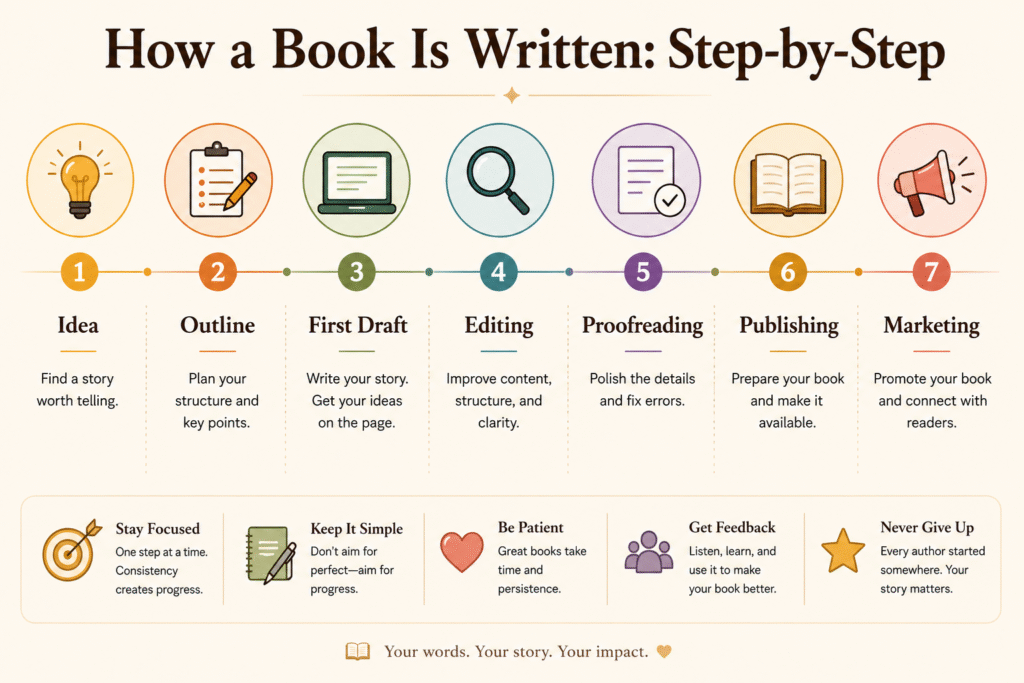
Finishing a book requires patience, discipline, and persistence. Many writers abandon manuscripts because they become overwhelmed by perfectionism or unrealistic expectations. The best approach is to focus on steady progress rather than instant success.
Writers should create achievable goals that help maintain momentum. Instead of aiming to complete an entire book quickly, focusing on daily or weekly writing targets feels more manageable. Consistency is far more important than writing large amounts occasionally.
Reading regularly can also improve writing quality. Studying storytelling techniques, character development, dialogue, and structure helps beginner writers strengthen their skills naturally. Writers who read frequently often develop a deeper understanding of pacing, language, and reader engagement.
Joining writing communities can provide motivation, accountability, and valuable feedback. Writing may feel lonely at times, but connecting with other authors helps beginners realize they are not alone in their struggles.
Most importantly, writers should remember that no book is created perfectly in one attempt. Growth happens through writing, rewriting, learning, and continuing despite challenges. Persistence is often the most important quality a writer can develop.
Conclusion
Writing a book for the first time is both exciting and challenging. Every writer experiences moments of doubt, frustration, and uncertainty during the creative process. From dealing with writer’s block and editing struggles to facing rejection and publishing difficulties, these experiences are all part of the journey.
Understanding these first-time book writing challenges helps aspiring authors prepare for the realities of writing and publishing. The most important thing is to continue moving forward despite setbacks. Great books are not created through perfection alone but through persistence, patience, and continuous improvement.
If you are currently working on your first manuscript, remember that every successful author once stood exactly where you are today. Keep writing, trust the process, and allow yourself to grow with every chapter you create.