
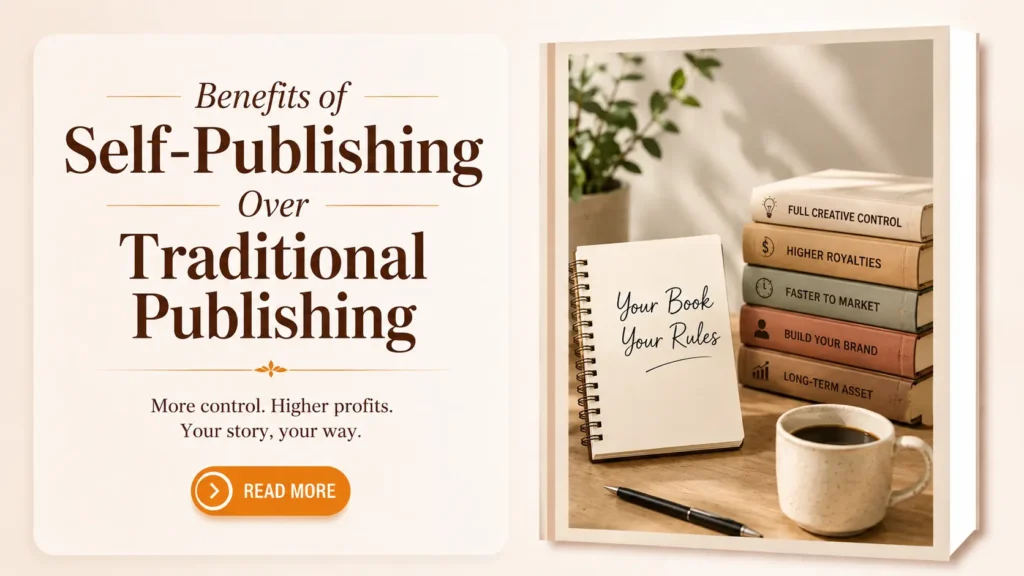
For decades, traditional publishing was considered the ultimate dream for writers. Getting accepted by a major publishing house symbolized success, credibility, and recognition. Authors spent months, sometimes years sending manuscripts to literary agents and waiting for approval letters that often never arrived. While traditional publishing still holds value, the publishing world has changed dramatically over the last decade.
Today, self-publishing is no longer viewed as a second option. In fact, many successful authors now choose self-publishing because it offers something traditional publishing often cannot freedom, control, speed, and direct ownership of creative work.
For modern writers, publishing is no longer about waiting for permission. It is about building a connection with readers and sharing stories on your own terms.
The rise of digital platforms : online bookstores, and independent publishing services has transformed the publishing industry completely. Authors who once struggled to get noticed now have the opportunity to publish professionally, reach global readers, and earn better royalties without depending entirely on traditional publishers.
If you are currently deciding between self-publishing vs traditional publishing, understanding the real advantages of self-publishing can help you make the best decision for your writing career.
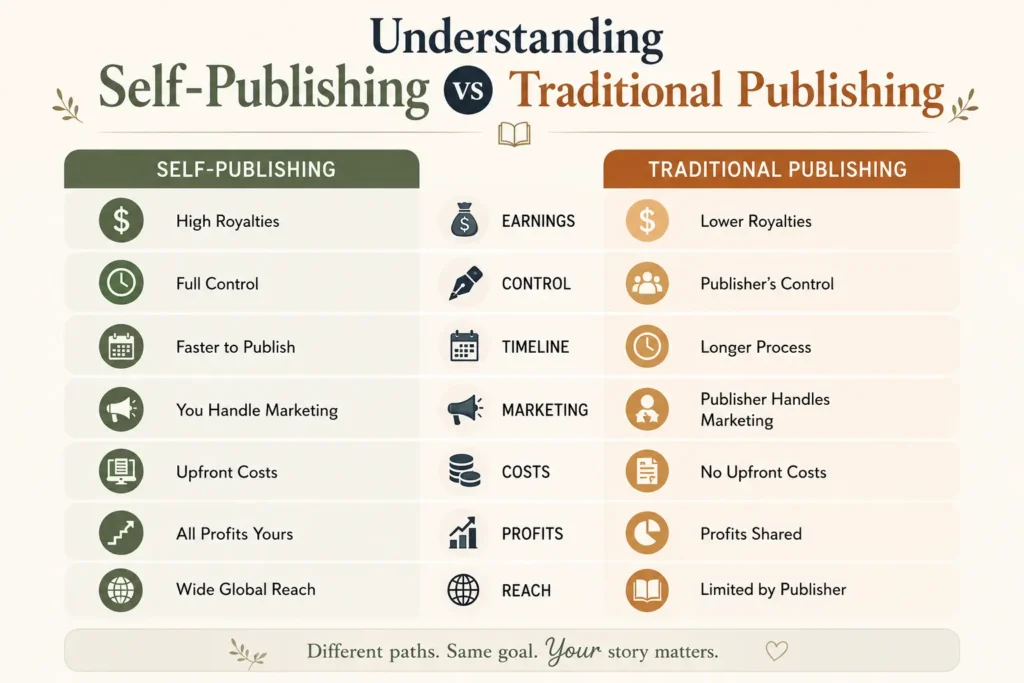
Understanding Self-Publishing vs Traditional Publishing
- Traditional publishing : follows a long and competitive process. Writers usually submit manuscripts to literary agents, who then pitch those manuscripts to publishing houses. Even after acceptance, authors may wait one to three years before their book officially reaches the market. During this process, publishers often control important decisions related to editing, cover design, pricing, marketing, and release schedules.
- Self-publishing : works differently. It allows authors to independently publish their books while maintaining ownership and creative control. Instead of waiting for approval from agents or publishers, writers can move directly toward editing, designing, publishing, and promoting their books. For many authors, this difference changes everything. Self-publishing gives writers the ability to turn ideas into published books without spending years waiting for opportunities. It empowers writers to become creators, entrepreneurs, and decision-makers in their own publishing journey.
Complete Creative Control Over Your Book
One of the biggest benefits of self-publishing is creative freedom. Every writer has a unique vision for their book: Whether it is the cover design, writing style, title, formatting, or marketing strategy, authors often feel emotionally connected to how their story should be presented to readers. In traditional publishing, many of these decisions are controlled by publishers based on commercial trends and market expectations. This can sometimes leave authors feeling disconnected from their own work.
- Self-publishing changes that experience completely: Writers have full authority over every creative aspect of their book. They can choose the cover style they love, decide how the manuscript is edited, select pricing strategies, and even determine when the book will launch. For many authors, this freedom is incredibly valuable because it allows their authentic voice and vision to remain untouched.
- Creative control also encourages originality: Writers no longer need to shape their ideas around what publishers believe will sell. They can confidently publish niche topics, personal memoirs, or experimental fiction that may not fit traditional market standards.
Faster Publishing Process
One of the most frustrating aspects of traditional publishing is the waiting period. Writers may spend months querying literary agents without receiving responses. Even after acceptance, the publishing timeline can move very slowly because of editing schedules, production planning, marketing preparation, and distribution arrangements.For passionate writers eager to share their work, this process can feel emotionally exhausting.Self-publishing offers a much faster path.
Once a manuscript is completed and professionally edited, authors can publish within weeks or months instead of years. This speed allows writers to maintain momentum, connect with readers sooner, and continue building their author careers without unnecessary delays.For writers who produce multiple books or series, faster publishing timelines can significantly improve visibility and reader engagement.
Higher Royalties and Better Financial Opportunities
Financial freedom is another major reason why many authors choose self-publishing over traditional publishing. In traditional publishing contracts, authors often receive smaller royalty percentages because publishers, distributors, agents, and retailers take portions of the earnings. While some traditional publishers provide advance payments, those advances are not always substantial, especially for new authors. Self-published authors usually earn significantly higher royalty percentages from book sales.
This means writers keep a larger share of the profits generated by their hard work. Over time, higher royalties can create stronger long-term income opportunities, especially for authors with loyal readerships or multiple published titles. More importantly, self-publishing advantages include direct control over pricing decisions, promotional campaigns, and sales strategies.
Freedom to Publish the Stories You Truly Want to Tell
Traditional publishers often make decisions based on commercial trends and market profitability. If a manuscript does not align with current publishing demands, it may face rejection regardless of its creativity or emotional depth. This reality discourages many talented writers. Self-publishing for beginners removes those limitations.
Authors can write about deeply personal experiences, niche educational topics, unconventional fiction, or culturally unique stories without worrying about industry gatekeepers. This has opened doors for diverse voices and independent creators who may have been overlooked by traditional publishing systems in the past.
Readers today are actively searching for authentic stories and fresh perspectives. Publishing your own book allows authors to meet that demand while remaining true to themselves.
Building a Direct Relationship With Readers
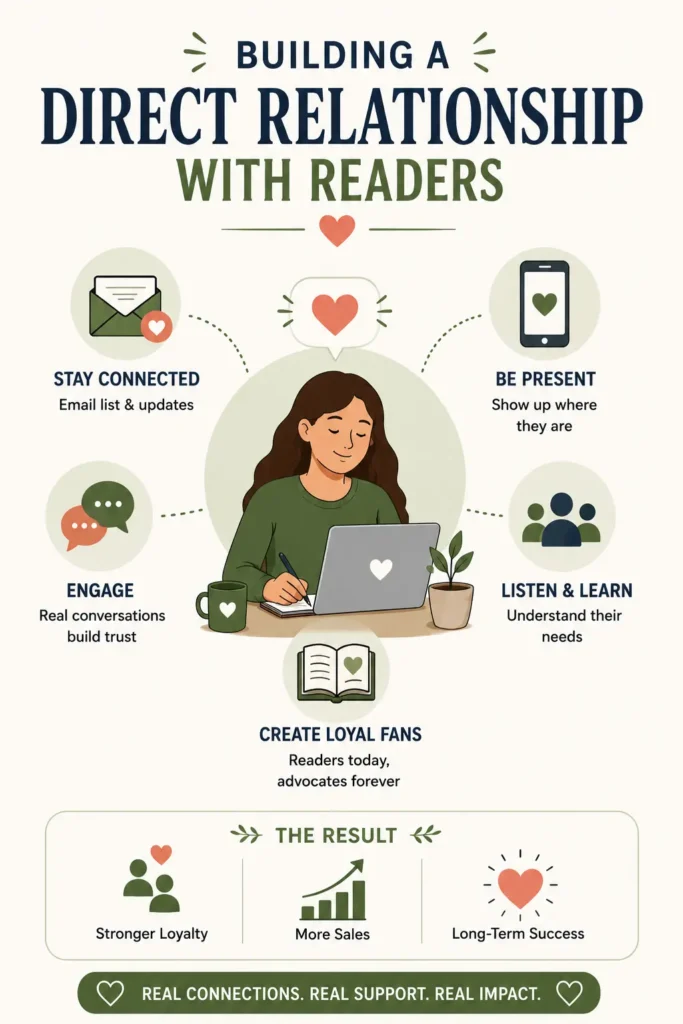
Modern publishing is no longer just about selling books. It is about building communities.Independent publishing allows authors to create stronger and more personal relationships with readers because they directly manage their branding, communication, and online presence. Through social media, newsletters, websites, and reader communities, authors can interact with audiences in meaningful ways. This connection helps writers understand what readers enjoy, what they expect, and how future books can better serve their audience.For many authors, this direct connection becomes incredibly motivating and emotionally fulfilling.
Flexibility in Marketing and Promotions
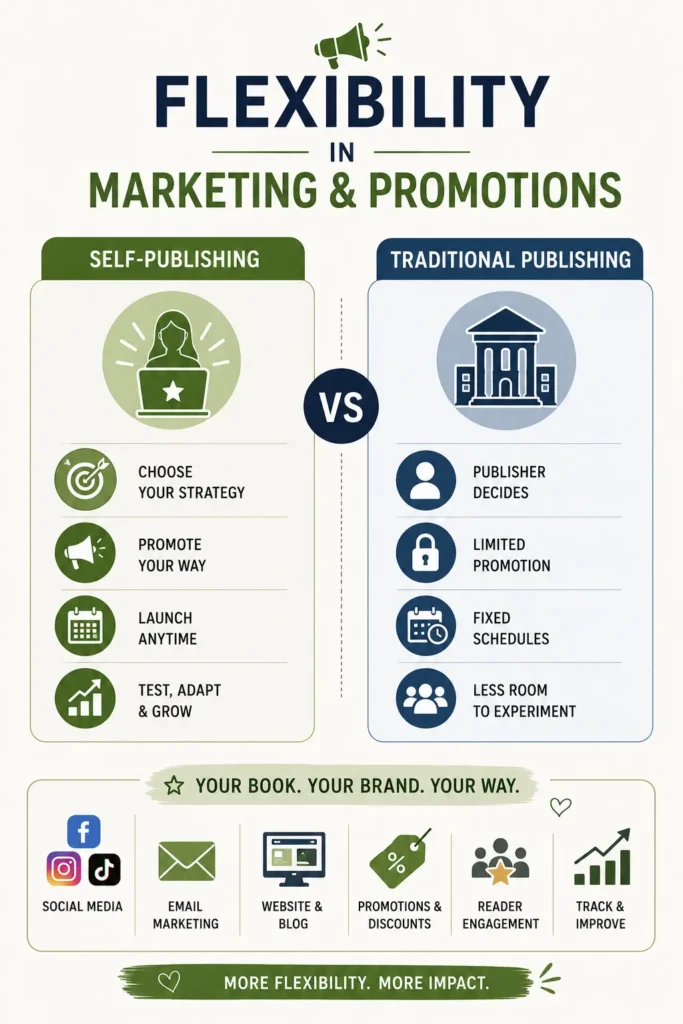
Marketing flexibility is another major self-publishing benefit. Traditional publishers usually control pricing changes, promotional campaigns, and advertising strategies. Authors often have limited influence over how their books are marketed after release. Self-publishing gives writers the ability to adapt quickly.
Authors can update book descriptions, redesign covers, adjust pricing, launch seasonal promotions, or experiment with different marketing techniques whenever they choose. This flexibility allows writers to respond to reader behavior and publishing trends much more effectively.
Why More Modern Authors Are Choosing Self-Publishing
The publishing industry is evolving rapidly.Readers now discover books through online marketplaces, social media, digital recommendations, and independent author communities. Because of this shift, self-published books have gained far greater visibility and credibility than ever before.
Many modern authors prefer independent publishing because it offers:
- faster publishing timelines,
- higher earning potential,
- stronger creative freedom,
- global reader access,
- and complete ownership of their work.
For writers who value independence and flexibility, self-publishing represents opportunity rather than compromise.
Conclusion
Choosing between self-publishing vs traditional publishing is a deeply personal decision for every writer. Traditional publishing still offers prestige and industry support, but self-publishing has created powerful opportunities for authors who value creative control, faster publishing, direct reader relationships, and higher royalties. Today, authors no longer need to wait years for permission to share their stories with the world. Self-publishing has made it possible for writers to become creators, entrepreneurs, and independent voices in the global publishing industry.For many modern writers, that freedom is priceless. Ready to publish your book with professional guidance and complete creative support? Visit AGPH Books to explore expert self-publishing, editing, and book marketing services for modern authors.