
The publishing industry is changing quickly, and authors today have more options than they did a few years ago. From AI tools and self-publishing to audiobooks, print-on-demand and digital marketing, the way books are written, published and promoted is evolving.
For authors in India, these changes bring both opportunities and new decisions. You can now choose different publishing models, reach readers through multiple formats, and start building an audience before your book is even released.
In this guide, we’ll look at the future of book publishing, the major trends shaping the industry in 2026, and what these changes actually mean for authors planning their next book.
Key Takeaways
- AI is changing how authors write and publish.
- Self-publishing gives authors more control.
- Audiobooks and eBooks are creating new formats.
- Print-on-demand is making printing more flexible.
- Author branding and digital marketing matter more than ever.
- Regional languages can open new reader markets.
- The future gives authors more ways to reach readers.
What Is Changing in the Book Publishing Industry?
The biggest change is that authors now have more choices. Publishing is no longer limited to one route where an author writes a manuscript and waits for a traditional publisher to accept it.
Today, an author can explore traditional publishing, self-publishing or hybrid options. A finished book can also reach readers as a printed book, eBook or audiobook.
Marketing has changed too. Social media, YouTube, podcasts, websites and email allow authors to connect with readers directly instead of depending only on bookstores or publishers for visibility.
Technology is also becoming part of the publishing process. AI tools can help with tasks such as brainstorming, research organisation and editing, while print-on-demand can make it easier to produce books without maintaining a large inventory.
These changes don’t mean traditional publishing or physical books are disappearing. They simply give authors more ways to create, publish and reach readers.
1. AI Is Changing How Authors Write and Publish
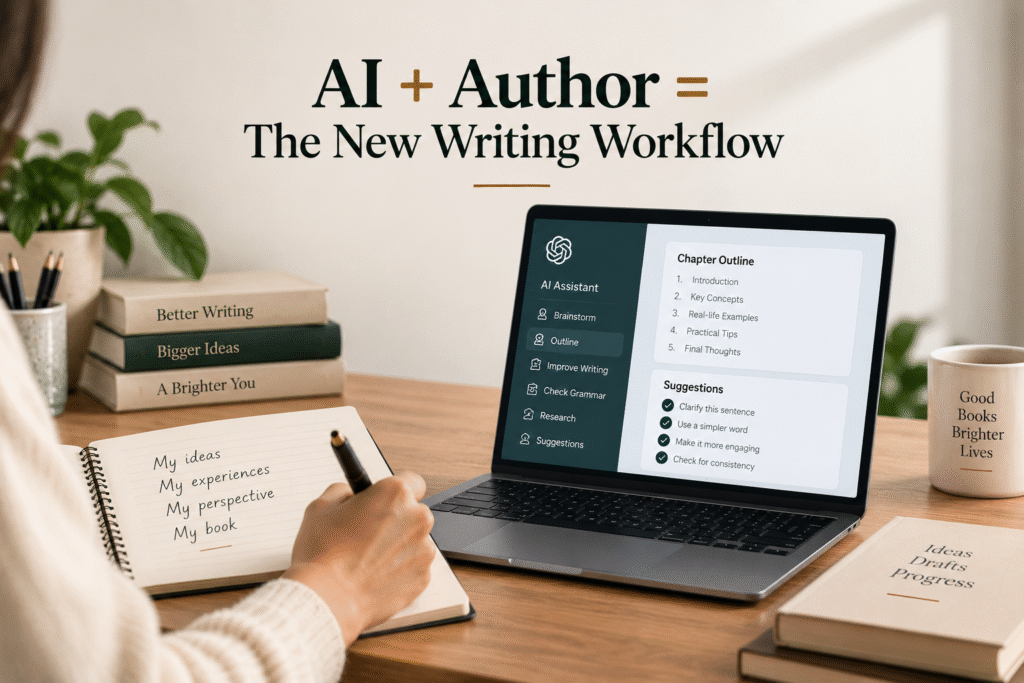
AI is becoming a useful part of the publishing process. Authors can use AI tools to brainstorm ideas, organise research, create an initial outline, check language and prepare some marketing content.
But using AI does not mean handing over the entire writing process. A book still needs the author’s own knowledge, experience, opinions and voice. Readers can usually tell when writing feels generic or disconnected from real experience.
For authors, the practical approach is to use AI where it saves time while keeping important creative decisions in human hands.
For example: You can use AI to organise ideas for a chapter, but the examples, experiences and final message should come from you.
What this means for authors
Don’t ask only, “How can AI write my book?” Ask:
“Which parts of my writing process can AI help me do better or faster?”
That mindset will be more useful as the future of book publishing continues to develop.
2. Self-Publishing Is Giving Authors More Control
Self-publishing has become an important option for authors who don’t want to depend entirely on the traditional publishing route. It gives authors more involvement in decisions about their book design, publishing timeline, formats and marketing.
This can be especially useful for first-time authors who want to bring a book to readers without going through a long traditional submission process.
But more control also means more responsibility. Authors may need to think about editing, proofreading, cover design, formatting, printing, distribution and promotion.
What this means for authors
Before choosing a publishing model, ask yourself:
- How much control do I want?
- Do I need professional help?
- What is my budget?
- Where do I want my book to be available?
Self-publishing is not automatically better than traditional publishing. The right choice depends on your book and your publishing goals.
Practical tip: Compare the services, costs, rights and distribution offered by a publishing company before signing any agreement.
3. Print-on-Demand Is Making Book Printing More Flexible
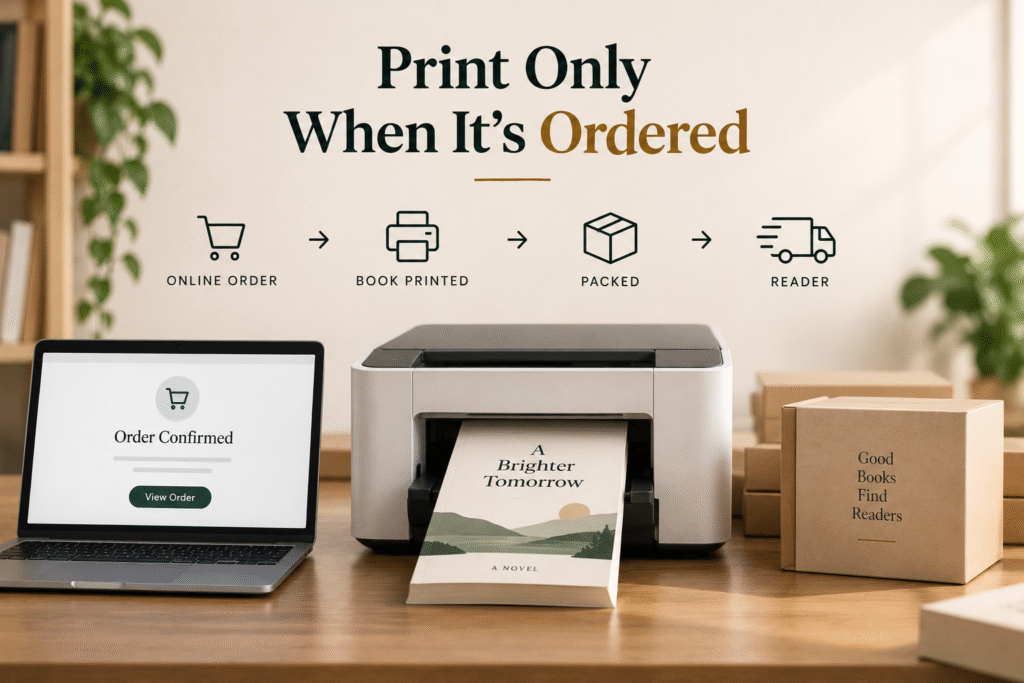
In the past, authors often had to print a large number of copies before knowing how many readers would actually buy the book. Print-on-demand (POD) offers another approach: copies can be printed when they are ordered instead of keeping a large stock.
This can be useful for first-time authors, niche books and titles with uncertain demand. It can also reduce the need for storage and help authors avoid being left with hundreds of unsold copies.
However, bulk printing can still make sense when an author already expects strong demand or needs a large number of copies for an event, institution or distribution campaign.
What this means for authors
Don’t choose a printing method only because it is cheaper.
Consider:
- Expected sales
- Number of copies needed
- Printing cost per copy
- Storage requirements
- Distribution plans
Practical tip: If you’re publishing your first book and don’t know how many copies you’ll sell, compare print-on-demand with a small print run before making a decision.
4. Audiobooks Are Becoming a Bigger Part of Publishing
Audiobooks are no longer just an extra version of a printed book. They are becoming an important format for reaching readers who prefer to listen while travelling, exercising, working or doing daily tasks.
The Indian audiobook market is expected to grow strongly in the coming years, and recent industry activity also shows publishers investing more in audio. For example, Penguin Random House India announced a partnership with Kuku FM that brought 12 Hindi audiobooks to the platform in 2026.
For authors, this means a finished manuscript can potentially reach readers in more than one format.
What this means for authors
When planning your book, ask:
- Would my book work well as audio?
- Who would listen to it?
- Would professional narration improve the experience?
- Could an audiobook help me reach a different audience?
Practical tip: Don’t wait until after publishing to think about audio. If your book has strong potential as an audiobook, consider the format while planning your publishing strategy.
5. Authors Are Becoming Their Own Marketing Channels
Publishing a book is no longer the final step. Authors increasingly need to think about how readers will discover the book.
Social media, YouTube, podcasts, websites and email newsletters give authors direct ways to build an audience. In India, social media is also playing a growing role in book discovery and helping publishers find authors with an existing audience.
This does not mean an author needs millions of followers. A smaller audience that is genuinely interested in your subject can be more useful than a large but unrelated following.
What this means for authors
Start building your audience before the book launch.
You can:
- Share useful ideas from your book
- Talk about your writing journey
- Create short videos around your topic
- Start an email list
- Appear on relevant podcasts or YouTube channels
- Connect with readers in your niche
Practical tip: Don’t make every post a sales pitch. Give people a reason to follow you before asking them to buy your book.
6. Regional-Language Publishing Has More Digital Opportunities
India’s publishing market is not limited to English and Hindi. Readers across the country consume books in many Indian languages, and digital platforms are making it easier for this content to reach readers beyond its traditional market.
For example, the Government of India’s Rashtriya e-Pustakalaya currently offers thousands of books across 23+ Indian languages and English, with formats including eBooks, text-to-speech and audiobooks.
This creates opportunities for authors writing in languages such as Hindi, Bengali, Marathi, Tamil, Telugu, Malayalam, Kannada and others. Translation can also help a book move from one language market to another.
What this means for authors
If you’re writing in an Indian language, don’t assume your potential audience ends with your local market.
Consider:
- Publishing in your strongest language
- Translating the book into another language
- Creating an eBook or audiobook
- Using digital platforms to reach readers outside your city or state
Practical tip: If your book has strong regional appeal, think about language and translation as part of your publishing strategy from the beginning.
7. Books Are Becoming Part of a Larger Digital Experience
A book no longer has to end with the last page. Authors and publishers can use digital tools to give readers extra content alongside the physical book.
For example, a book can include a QR code that takes readers to a video, podcast, worksheet, reading guide or bonus material. This approach is already being used in educational publishing, where physical books are being connected with digital resources.
This can work for other types of books too. A business book could link to downloadable templates, while a memoir could include an author interview or additional photographs.
What this means for authors
When planning your next book, ask:
“What can I give the reader beyond the printed pages?”
You don’t need to make the book complicated. Even one useful digital resource can add value.
Practical tip: If your book includes worksheets, videos, audio or other bonus material, plan these resources while writing the manuscript rather than adding them at the very end.
8. Direct-to-Reader Publishing Will Become More Important
Authors are increasingly finding ways to build a direct relationship with readers instead of depending only on bookstores or publishers to create awareness. Social media, author websites, email newsletters, online communities and direct sales can all help an author stay connected with readers.
This shift is already visible in India, where independent authors are using digital platforms and direct audience engagement to build readership outside traditional publishing routes.
For authors, this means a book can become more than a one-time product. Readers who discover your work can follow your future books, events, newsletters and other content.
What this means for authors
Start building your reader community before your book is published.
You can:
- Create an author website
- Share useful content on social media
- Start an email list
- Collect reader feedback
- Build a community around your topic
Practical tip: Don’t wait until your book launch to find readers. Start building relationships with the people who may want to read your book today.
Will AI Replace Authors?
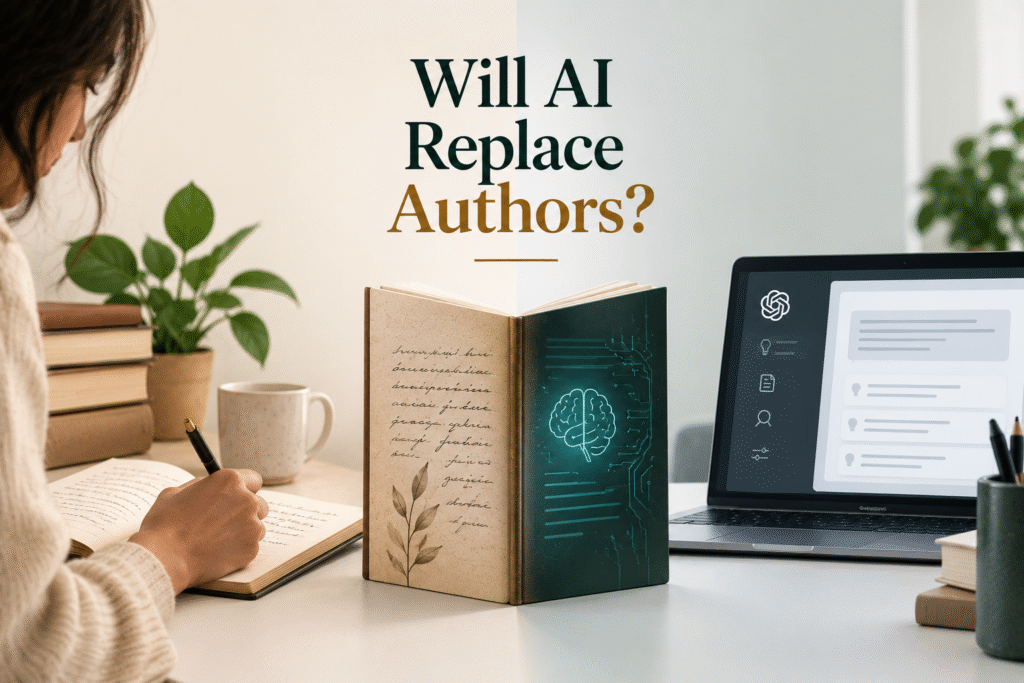
AI is already changing publishing, but replacing authors is a much bigger question. In 2026, publishers and writers are discussing AI not only as a writing tool, but also in areas such as editing, translation, marketing and production. India’s National Book Trust has also highlighted AI and technology as part of the changing publishing landscape.
The more likely future is that AI will assist authors rather than completely replace them. An author can use AI to organise ideas, brainstorm, improve a draft or handle repetitive tasks. But the knowledge, experience, opinions and personal voice behind a book still need human judgment.
There is also a growing concern about trust and originality when books rely too heavily on AI-generated content. Publishers and writers are now discussing how to maintain authorship, quality and reader trust.
What this means for authors
Don’t think of AI as a replacement for your writing.
Think of it as a tool that can help you:
- Develop ideas
- Organise research
- Improve drafts
- Save time on repetitive work
The strongest advantage may belong to authors who use technology without losing their own voice.
What These Trends Mean for Authors
The changes in publishing are not just about new technology. They are changing the decisions authors need to make before and after writing a book.
If you’re planning your first book, start with the basics: a clear topic, a defined audience, a strong manuscript and the right publishing model. You don’t need to adopt every new trend just because it is available.
If your manuscript is already finished, think about whether it could work in print, eBook or audio, and how readers will discover it. Building an audience through social media, a website or other channels can also support your book after publication.
For existing authors, the opportunity may be in doing more with books they already have-such as translations, audiobooks, digital resources or new ways of reaching readers.
The National Book Trust’s 2026 publishing course highlighted this broader shift, covering digital publishing, audiobooks, AI, rights management, self-publishing, marketing and distribution as part of the changing publishing landscape.
A practical approach for authors
Don’t try to follow every trend. Ask:
Will this make my book better, help me reach more readers, or make my publishing process easier?
If the answer is yes, explore it. If not, focus on writing a strong book first.
What Could Book Publishing Look Like in 2030?
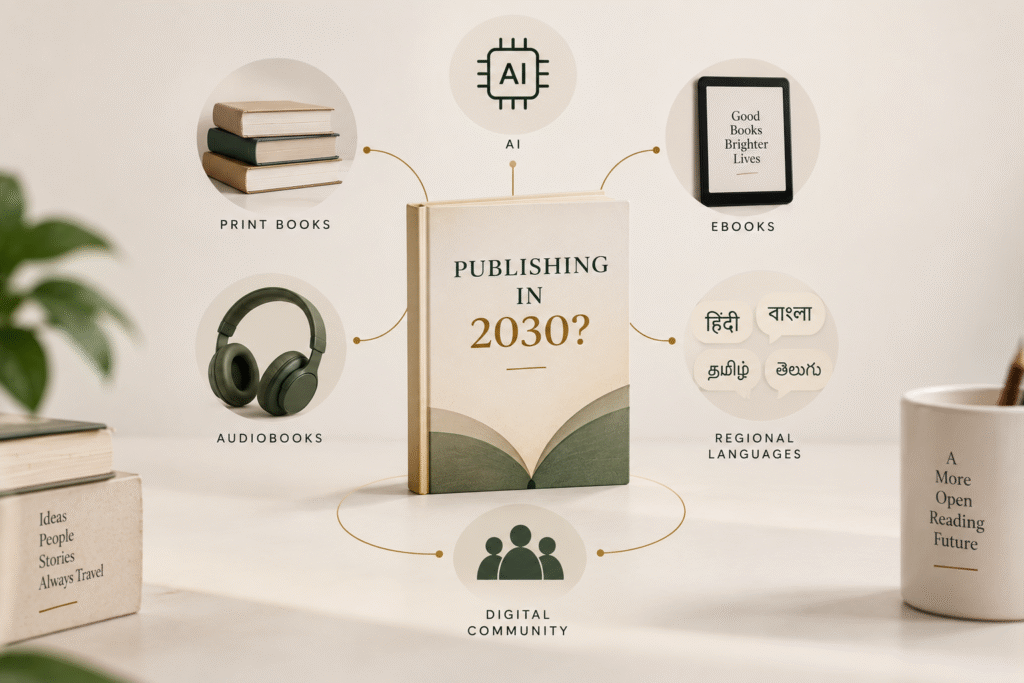
It is impossible to know exactly what publishing will look like in 2030, but the direction is already becoming clearer. India is moving toward a publishing ecosystem where print, digital and audio can work alongside each other, while AI becomes part of more publishing workflows. Industry discussions in 2026 are already focusing on these areas, along with self-publishing, rights and changing reader behaviour.
We may see:
- More books available in multiple formats
- Greater use of AI in editing, translation and production
- More regional-language digital content
- Stronger direct connections between authors and readers
- More print-on-demand and flexible printing options
- Books connected with digital resources and communities
But one thing is unlikely to disappear: the value of a good book. Print continues to have a strong place in publishing, even as digital and audio formats grow.
For authors, the lesson is simple: don’t try to predict every change. Build a strong book and stay open to new ways of reaching readers.
Frequently Asked Questions About the Future of Book Publishing What is the future of book publishing in India?
The industry is moving toward a mix of print, digital and audio formats, with AI, self-publishing, regional languages and digital marketing playing a larger role.
Will AI replace traditional publishing?
AI is more likely to change parts of the publishing workflow than completely replace publishers. Editing, translation, marketing and production are among the areas where AI is already being explored.
Is self-publishing the future?
Self-publishing is already an established option. Its role is likely to continue growing as more authors look for control over publishing, while traditional publishing will continue to serve authors who prefer a publisher-led model.
Will physical books disappear?
There is little reason to assume that. Print continues to dominate India’s book market, while digital and audio formats are growing alongside it.
Should authors consider audiobooks in 2026?
If the subject and audience suit audio, it is worth considering. An audiobook can give an existing book another format and help reach people who prefer listening.
Is traditional publishing still relevant?
Yes. Traditional publishing remains an important part of India’s publishing ecosystem. The change is that authors now have more choices alongside it, including self-publishing, digital formats and direct reader engagement.
Final Thoughts
The future of book publishing is not about one format replacing another. Print, eBooks and audiobooks can continue to exist together, while AI, digital tools and new publishing models give authors more choices. Current publishing discussions in India are already focusing on AI, audiobooks, digital publishing, self-publishing, multilingual publishing and changing reader behaviour.
For authors, the biggest opportunity is flexibility. You can choose the publishing model, format and marketing approach that fit your book and audience.
You don’t need to follow every new trend. Write a strong book first, then use the right technology and publishing options to help it reach more readers.