
Language and communication are part of almost everything we do. We use them when we talk to our family, attend a class, write an email, give a presentation, work with a team, speak to a customer, or share something online.
But effective communication is not simply about knowing more words or speaking fluent English. It is about expressing an idea clearly, listening carefully, understanding the other person, and choosing the right way to communicate.
The book Language in Context: Communication Across Disciplines by Dr. Parvin M. Shaikh explores how language and communication work across personal, academic, professional, social, and technological settings. It also connects communication with learning, research, decision-making, collaboration, and professional growth.
In today’s connected world, these skills have become even more important. Students need them for learning and presentations. Professionals need them for teamwork, meetings and leadership. Researchers need them to share knowledge, while businesses depend on communication to connect with customers and employees.
So, what exactly are language and communication, and why do they matter so much in everyday life?
Let’s understand them in simple terms.
What Is Language and Communication?
Language is one of the main ways we express our thoughts, feelings, experiences, and knowledge. But it is more than a collection of words and grammar. It helps us build relationships, share ideas, learn new things, and take part in society.
Communication is the process of sharing information, ideas, feelings, or messages with others. It can happen through spoken words, writing, gestures, facial expressions, images, or digital platforms.
For example, when a teacher explains a topic in class, a student asks a question, or two colleagues discuss a project, communication is taking place.
Language and Communication: What Is the Difference?
The two are closely connected, but they are not exactly the same.
- Language gives us a way to express meaning.
- Communication is the process of sharing and understanding that meaning.
- Language can be spoken, written, or expressed through different symbols.
- Communication can also include body language, gestures, visuals, tone, and feedback.
Good communication happens when the message sent by one person is understood correctly by another. This is why clarity, the right language, audience awareness, and feedback are so important.
What Does Language Mean in a Global Context?
Language is much more than a way to speak or write. It helps people share ideas, express emotions, exchange knowledge, build relationships, and understand different cultures. As people from different countries and backgrounds interact more often, the way we use language becomes even more important.
In a global context, communication does not happen only between people who share the same language or culture. Students may study with classmates from different countries, businesses may work with international clients, and researchers may collaborate across borders.
This makes clear and adaptable communication an important skill.
To explore how communication connects with universal human values, you can read more here
Language Connects People Across Cultures
Language also carries cultural values, traditions, beliefs, and social practices. The words we use and the way we communicate can be influenced by our background and community.
When people understand these differences, they can communicate with greater respect and avoid unnecessary misunderstandings. The book highlights the importance of cultural awareness, language diversity, and cross-cultural communication in creating better understanding in a connected world.
This is especially important when communication takes place across different languages. Multilingual communication can support education, international business, research, teamwork, and cultural exchange.
In simple terms, language helps us do more than speak to people. It helps us understand people even when their language, culture, or professional background is different from ours.
Why Are Effective Communication Skills Important?
Good communication can make a simple idea clear or turn it into a misunderstanding. That is why effective communication skills are important in almost every part of life.
We use communication to share information, express feelings, solve problems, learn, and work with others. The book explains that language and communication support personal, academic, professional, and social interaction.
Communication in Everyday Life
At home, communication helps people understand each other and maintain relationships. A clear conversation can solve a problem that might otherwise become a misunderstanding.
Communication in Education
Students use language to understand lessons, ask questions, write assignments, take notes, give presentations, and participate in discussions. Reading, writing, listening, and speaking are all important for academic success.
Communication in Professional Life
In the workplace, communication is needed for emails, meetings, reports, presentations, teamwork, interviews, and decision-making. A professional who can explain an idea clearly can work more effectively with colleagues and clients.
Communication Builds Understanding
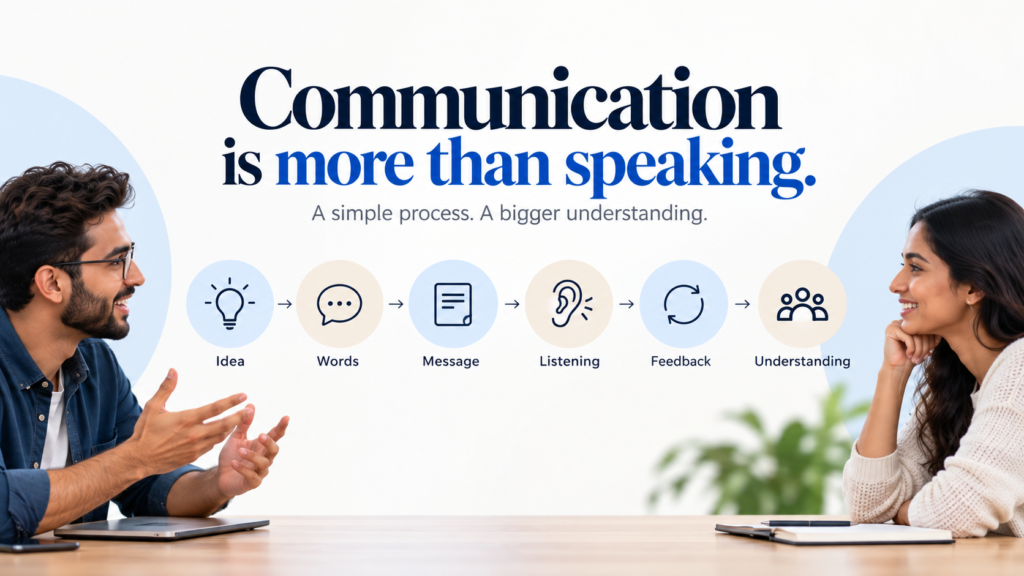
Effective communication is not just about sending a message. The other person should also understand what you actually mean. This requires clear language, active listening, feedback, and awareness of the audience.
In simple words, communication skills help us say the right thing, understand others better, reduce confusion, and work together more effectively.
Different Forms of Communication We Use Every Day
Communication does not happen in just one way. Depending on the situation, people may use words, body language, writing, images, or digital platforms to share a message.
The book explains seven major forms of communication: verbal, non-verbal, written, visual, digital, formal, and informal communication.
Verbal Communication
Verbal communication uses spoken words. Conversations, meetings, interviews, lectures, presentations, and discussions are common examples.
Clear words, suitable vocabulary, tone, pronunciation, and good listening all affect how well a spoken message is understood.
Non-Verbal Communication
Sometimes, we communicate without saying a word. Facial expressions, gestures, eye contact, posture, body movements, and appearance can all carry meaning.
For example, a smile may show friendliness, while avoiding eye contact may communicate discomfort or hesitation.
Written Communication
Emails, reports, articles, research papers, books, notices, and official documents are forms of written communication. It is especially useful when information needs to be recorded accurately and referred to later.
Visual and Digital Communication
Charts, graphs, images, diagrams, maps, and videos can make complex information easier to understand. Digital communication has expanded this further through emails, social media, video meetings, messaging apps, websites, and online communities.
Formal communication follows official channels, while informal communication is more natural and casual. Both have their place in personal and professional life.
The important point is simple: effective communication means choosing the right form for the right message, audience, and situation.
What Makes Communication Effective?
Simply sending a message does not mean communication has been successful. The real goal is to make sure the other person understands what you mean.
Effective communication depends on clear language, the right tone, active listening, feedback, and choosing a suitable way to deliver the message.
1. Clarity and Precision
Your message should be simple and easy to understand. Avoid unnecessary complexity or words that can have multiple meanings.
For example, instead of saying “Send it soon,” say “Please send the report by 4 PM today.”
The second message gives a clear expectation and leaves less room for confusion.
2. Complete Information
A message should include the important information the receiver needs. Missing details can lead to wrong assumptions, delays, and repeated questions.
3. Keep It Short and Relevant
Being clear does not mean writing or speaking too much. Good communication focuses on the main point and avoids unnecessary repetition.
4. Understand Your Audience
The same message may need different language depending on who is receiving it. A teacher, customer, colleague, child, or researcher may have different levels of knowledge and different expectations.
Choosing the right words, tone, and communication method makes the message easier to understand.
5. Listen and Take Feedback
Communication is a two-way process. Listening helps you understand concerns, questions, and reactions, while feedback tells you whether your message was understood correctly.
6. Use the Right Tone and Body Language
Words are only one part of communication. Tone, facial expressions, gestures, and body language can also influence how a message is understood.
In short, effective communication is not about using impressive words. It is about creating clear understanding between people.
Communication Barriers: Why Do People Misunderstand Each Other?
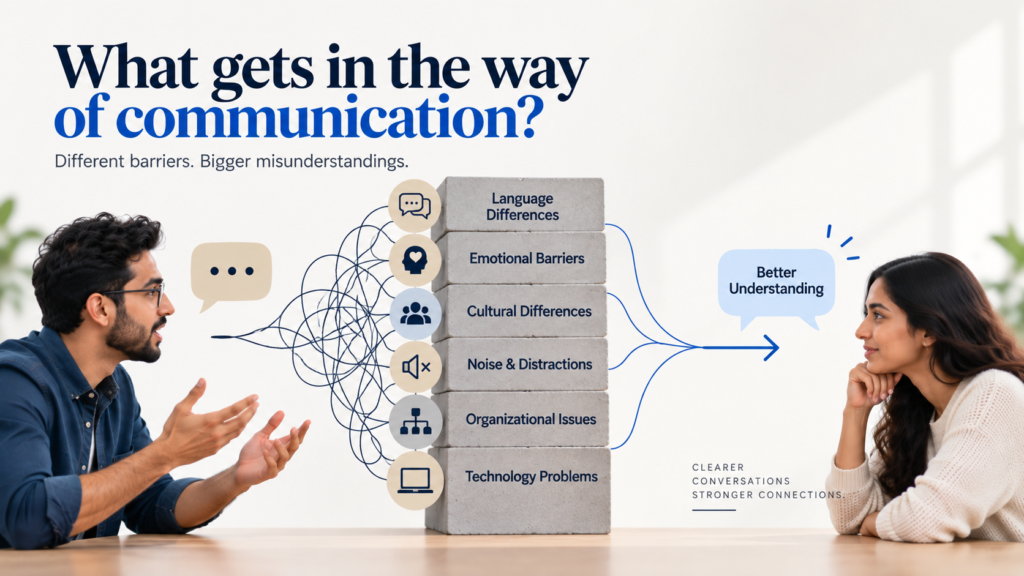
Even when people speak the same language, communication can fail. A message may be unclear, emotions may affect how it is understood, or cultural and technological differences may create confusion.
The book identifies several common communication barriers, including language, psychological, cultural, social, organizational, physical, and technological barriers.
Language and Meaning
Different vocabulary, pronunciation, language ability, or technical terms can make a message difficult to understand. Even the same word can have different meanings for different people.
Using simple, precise, and audience-friendly language can reduce this problem.
Emotional Barriers
Stress, fear, anger, anxiety, or lack of confidence can affect both speaking and listening. For example, when someone is already frustrated, they may interpret a neutral message as negative.
Cultural and Social Differences
People from different cultures may have different ways of using words, gestures, expressions, and social behaviour. Respecting these differences becomes especially important in multicultural environments.
Workplace and Technology Barriers
In organizations, unclear responsibilities, information overload, poor coordination, and weak communication channels can create delays. Online communication can also be affected by poor internet connections, software problems, or limited digital skills.
How Can We Overcome These Barriers?
A few simple habits can make communication better:
- Use clear and simple language.
- Listen without interrupting.
- Ask questions when something is unclear.
- Encourage feedback.
- Respect different cultural perspectives.
- Choose the right communication channel.
- Stay calm during difficult conversations.
Good communication is not about avoiding every difference. It is about understanding those differences and finding a better way to connect.
Communication Across Different Academic and Professional Fields
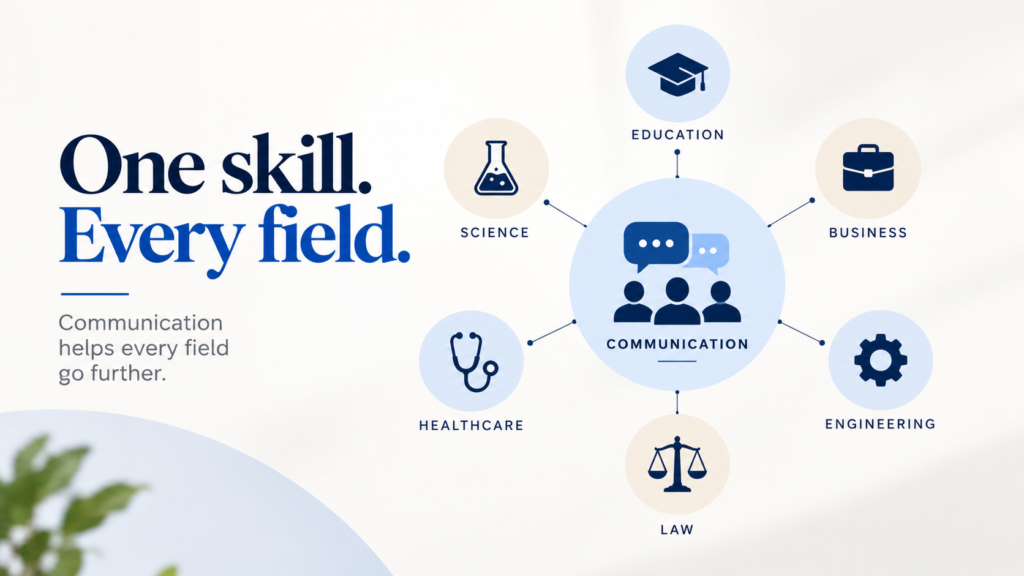
The way we communicate changes with the field we work in. A scientist, business professional, engineer, doctor, or lawyer may all discuss the same broad idea, but they often use different terms, formats, and styles.
This is why communication across disciplines is important. It helps people from different areas understand each other, share knowledge, and work together on complex problems.
Language in Science
Scientific communication focuses on accuracy, clarity, objectivity, and evidence. Researchers use specific terms and structured writing to explain observations, theories, experiments, and research findings.
For example, a research paper cannot depend on vague statements. The information needs to be precise so that other researchers can understand and use it correctly.
Language in Business
Business communication is more focused on practical outcomes. Emails, reports, meetings, presentations, negotiations, and customer communication all require language that is clear and professional.
A business message should help people understand what needs to be done, why it matters, and what action is expected.
Language in Engineering and Technology
Engineering and technology often require technical accuracy. Instructions, specifications, project documents, and technical reports need to communicate information without creating confusion.
Language in Healthcare
Healthcare communication requires both accuracy and understanding. The book highlights the importance of empathy, accuracy, and ethical responsibility when communicating in healthcare settings.
Why Interdisciplinary Communication Matters
Many modern problems cannot be solved by one field alone. A major project may require researchers, engineers, business professionals, healthcare experts, administrators, and other specialists to work together.
When people can communicate beyond their own field, they can share knowledge more effectively, find better solutions, and collaborate across professional boundaries.
The goal is not to make every discipline communicate in the same way. It is to make different disciplines understand each other.
Professional Communication: The Skills That Matter at Work
In professional life, communication is part of almost everything you do. You use it when writing an email, attending a meeting, explaining an idea, preparing a report, speaking with a client, or working with your team.
Professional communication is not about using complicated English or formal words. It is about communicating with clarity, respect, responsibility, and professionalism.
Clear Communication Builds Better Teams
In an organization, information moves in different directions. Managers communicate with employees, employees share feedback with managers, and colleagues coordinate with each other.
Clear communication helps teams understand responsibilities, solve problems, manage conflicts, and work toward common goals.
Professional Etiquette Matters
The way you communicate can affect your professional relationships. Courtesy, respect, punctuality, reliability, appropriate body language, and consideration for others are important parts of professional etiquette.
Even a simple email can create a different impression depending on its tone. A polite and well-structured message makes the purpose clear while showing respect for the recipient.
Active Listening Is a Professional Skill
Communication at work is not only about speaking. Active listening helps you understand instructions, feedback, concerns, and different viewpoints.
It can also prevent small misunderstandings from becoming bigger workplace problems.
Digital Communication Needs Professionalism Too
Communication at work is not only about speaking. Active listening helps you understand instructions, feedback, concerns, and different viewpoints.
It can also prevent small misunderstandings from becoming bigger workplace problems.
Digital Communication Needs Professionalism Too
Emails, messaging platforms, video meetings, and other digital tools are now part of everyday workplace communication. This makes digital etiquette equally important.
A professional communicator knows when to write, when to speak, when to listen, and when a conversation needs a more appropriate channel.
Ultimately, strong workplace communication helps people coordinate better, build trust, and contribute more effectively to their organization.
Language, Culture and Cross-Cultural Communication
Language and culture are closely connected. The way people speak, write, express ideas, and respond to others is often influenced by their cultural background, traditions, values, and social environment.
As education, business, research, and workplaces become more global, people increasingly communicate with those who may have different languages and cultural experiences. This makes cross-cultural communication an important skill.
Why Cultural Awareness Matters
A word, gesture, expression, or communication style may be understood differently in different cultures. What feels normal or polite to one person may have a different meaning to someone from another background.
Being aware of these differences can reduce misunderstandings and create more respectful interactions.
The Role of Multilingual Communication
Multilingual communication involves using two or more languages in social, educational, professional, or cultural situations. It can help people overcome language barriers and support cooperation, knowledge sharing, and inclusion.
In education, it can help students access knowledge and interact with people from different backgrounds. In professional life, it can support international business, customer service, diverse teams, and global collaboration.
Communicate With Respect
Good cross-cultural communication does not require knowing every cultural rule. It starts with simple habits:
- Listen before making assumptions.
- Respect different communication styles.
- Avoid stereotypes and biased language.
- Ask when something is unclear.
- Be open to different perspectives.
- Adapt your language to the people and situation.
Effective communication across cultures begins with the willingness to understand, not simply the desire to be understood.
Communication in the Digital Age
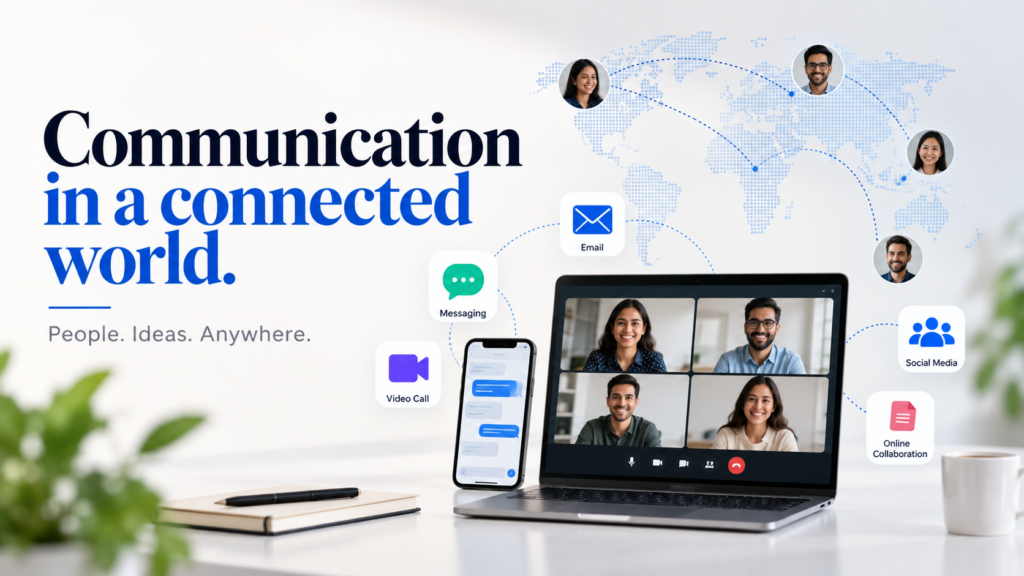
Technology has changed the way people communicate. Today, a message can reach someone across the world within seconds through email, social media, messaging apps, video calls, websites, and other digital platforms.
The book describes digital communication as an important part of modern personal, academic, and professional interaction. It has made communication faster, more accessible, and easier across geographical boundaries.
Digital Communication in Education and Work
Students can attend online classes, exchange study materials, participate in forums, and collaborate with people from different locations.
In professional life, teams can use email, video conferencing, instant messaging, and cloud-based tools to coordinate projects and share information. Digital communication has therefore made remote and global collaboration much easier.
Why Digital Etiquette Matters
The speed of digital communication also creates new responsibilities. A short message can sometimes sound rude or unclear because the receiver cannot see your facial expression or hear your tone.
Using respectful language, checking your message before sending it, responding appropriately, and choosing the right platform can make digital communication more effective.
Technology can make communication faster, but good language and communication skills are still what make the message meaningful.
Ethical and Inclusive Communication
Effective communication is not only about being clear. It is also about how we treat people through our words and actions.
Ethical communication means sharing information honestly and responsibly while showing respect for others. Inclusive communication goes a step further by making sure people from different backgrounds can participate and feel understood.
What Does Ethical Communication Mean?
In professional and academic situations, communication should be based on honesty, respect, empathy, fairness, and responsibility. Information should not be deliberately misleading, and people’s privacy and dignity should be respected.
This becomes especially important when communicating sensitive information, giving feedback, or making decisions that affect others.
Making Communication More Inclusive
Inclusive communication means being aware of differences in language, culture, abilities, and social backgrounds.
Some practical approaches include:
- Avoiding stereotypes and discriminatory language.
- Using respectful and non-discriminatory terms.
- Providing information in accessible formats where needed.
- Encouraging different people to participate.
- Listening to different perspectives.
- Showing empathy when communicating with others.
Why It Matters
When people feel respected and included, communication becomes easier and more productive. This is valuable in classrooms, workplaces, research teams, public services, and online communities.
Good communication should not only make a message understandable; it should also make the interaction respectful and inclusive.
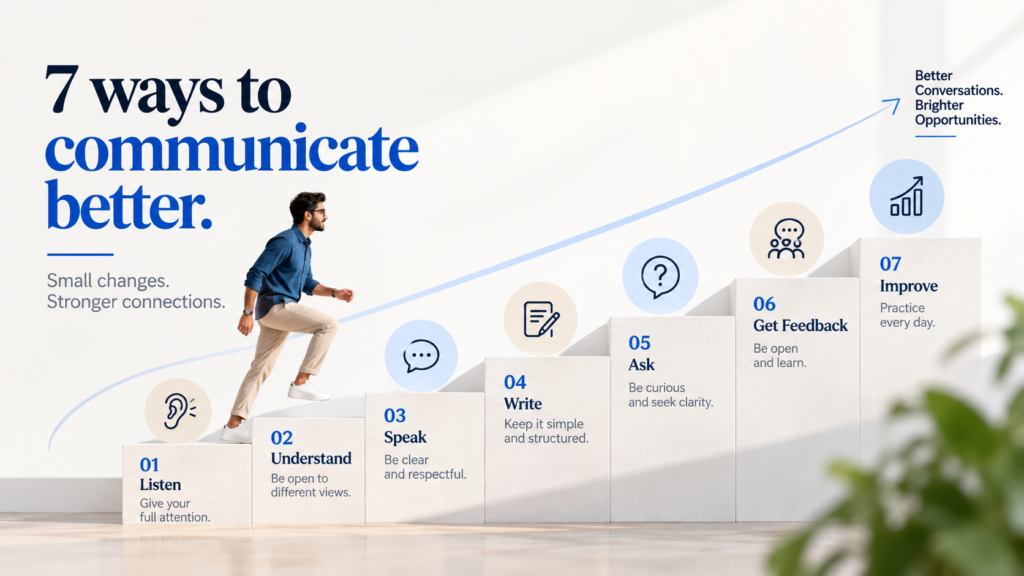
How to Improve Your Communication Skills: 7 Practical Steps
Strong communication is not something people are simply born with. It can be developed through practice, awareness, and regular self-improvement.
Whether you are a student, employee, manager, researcher, or business professional, these simple habits can help you build effective communication skills.
1. Practice Active Listening
Communication begins with listening. Give the speaker your attention, avoid interrupting, and focus on understanding the complete message before responding.
2. Keep Your Message Clear
Use simple and precise language. Avoid unnecessary jargon when your audience may not understand it.
Before communicating, ask yourself: “What exactly do I want the other person to understand?”
3. Understand Your Audience
Change your language, tone, and level of detail according to the person and situation. The way you explain an idea to a customer may be different from how you explain it to a subject expert.
4. Ask Questions
If something is unclear, ask instead of making assumptions. Questions can prevent misunderstandings and show that you are genuinely trying to understand.
5. Pay Attention to Non-Verbal Communication
Your facial expressions, gestures, posture, eye contact, and tone can influence how your words are received. Make sure your non-verbal signals support your message.
6. Take and Give Feedback
Feedback helps you understand whether your message was received correctly. It can also show you where your communication needs improvement.
7. Practise and Self-Assess
Communication improves with regular practice. After an important conversation, presentation, email, or interview, think about what worked and what could have been clearer.
The book also connects communication development with confidence, critical thinking, problem-solving, creativity, and self-assessment, showing that communication skills contribute to broader personal and professional development.
Small improvements in how you listen, speak, write, and respond can make a significant difference in how effectively you communicate.
Communication Skills for Students and Professionals
Strong communication skills are useful at every stage of life. For students, they support learning, presentations, assignments, discussions, and collaboration. For professionals, they become important in meetings, emails, interviews, reports, teamwork, and client interactions.
Communication Skills for Students
Students need more than subject knowledge. They also need to explain what they know clearly.
Reading, writing, listening, and speaking help students participate actively in academic environments and communicate their ideas with confidence.
Communication Skills for Professionals
In professional life, communication affects how effectively people share information, solve problems, collaborate, and build workplace relationships.
Developing these skills can therefore support both academic communication and professional communication.
Whether you are preparing for an exam, attending an interview, leading a team, or presenting an idea, the ability to communicate clearly remains a valuable skill.
FAQs About Language and Communication
What is language and communication?
Language is a system people use to express ideas, emotions, experiences, and knowledge. Communication is the process through which people exchange information and create understanding. Together, they help people interact, learn, collaborate, and build relationships.
Why are communication skills important?
Communication skills help people express their ideas clearly, understand others, solve problems, and work effectively with different people. They are useful in personal life as well as in academic and professional environments.
What are the main types of communication?
Communication can be verbal, non-verbal, written, visual, digital, formal, or informal. The appropriate form depends on the purpose, audience, and situation.
How can I improve my communication skills?
Start with active listening, clear language, audience awareness, asking questions, constructive feedback, and regular practice. Paying attention to your tone and non-verbal communication can also improve how your message is understood.
What are common barriers to communication?
Common barriers include language differences, unclear meanings, emotional factors, cultural differences, organizational problems, environmental distractions, and technological limitations.
Why is communication important for students?
Students use communication skills for reading, writing, listening, speaking, classroom discussions, assignments, presentations, and collaboration. Strong academic communication can help students participate more effectively in their learning environment.
Why is communication important in professional life?
Professional communication is used in meetings, emails, reports, presentations, interviews, teamwork, leadership, and client interactions. Clear and respectful communication supports coordination and professional relationships.
What is cross-cultural communication?
Cross-cultural communication happens when people from different cultural or linguistic backgrounds communicate with one another. Cultural awareness and respect can help reduce misunderstandings and support better cooperation.
Why is digital communication important?
Digital communication allows people to exchange information quickly through email, social media, video conferencing, messaging, websites, and other online platforms. It has expanded communication across geographical boundaries in education, business, and everyday life.
Is communication only about speaking?
No. Communication also includes listening, writing, body language, facial expressions, gestures, visual information, and digital interaction. Effective communication depends on how well people send and understand messages.
Conclusion
Language and communication are part of almost every area of human life. From classrooms and research to workplaces, businesses, digital platforms, and cross-cultural interactions, the ability to communicate clearly helps people share knowledge, build relationships, solve problems, and work together.
Effective communication is not about using difficult words. It is about choosing the right language, understanding your audience, listening carefully, respecting differences, and making your message clear.
As communication continues to evolve across disciplines and digital platforms, these skills will remain valuable for both students and professionals.
Better communication creates better understanding and better understanding creates stronger connections.
For a deeper understanding of language in global context, you can explore this book: Buy Here